What It’s Like to Stay at One of the Haunted Hotels in Scotland

This stay places the Holiday Inn Dumfries firmly among haunted hotels in Scotland, based on staff accounts and the building’s documented past. From the outset, the front desk staff were exceptionally friendly and welcoming. Check-in felt relaxed and efficient, which set the tone for the stay. In addition, free WiFi with IHG One Rewards membership and free parking is available directly outside the hotel, with plenty of space and no restrictions at the time of my visit.
This article contains affiliate links; if you purchase through them, we may earn a small commission at no extra cost to you.
However, I never use free hotel Wi-Fi without a VPN, which I explain in more detail in my post on why I use a VPN when away from home.
Inside the hotel, the bar and dining areas provide the main food options. The meals served were pleasant enough and reasonably priced. However, there are few nearby alternatives within easy walking distance, especially in the evening.
The room itself was spotless on arrival. The bed was incredibly comfortable, with crisp linens and excellent blackout curtains. After a full day travelling around southern Scotland, I focused on staying hydrated, which I cover in more detail in my hydration routine here. As a result, I slept very well throughout the night. Plan your stay here
Haunted Hotels in Scotland: Breakfast in the Former Asylum
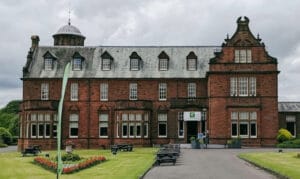
In the morning, the breakfast buffet provided a good self-service spread. The selection included the usual hot and cold options and worked well before a day of exploring. Because of its partial origins as a Victorian lunatic asylum, the Holiday Inn Dumfries often features in discussions about haunted hotels in Scotland.
During my stay at the Holiday Inn Dumfries, staff spoke openly about the building’s past. Several staff members described the hotel as haunted, particularly in areas that once formed part of the Crichton Institution for Lunatics, later formally known as the Crichton Royal Institution.
Many haunted hotels in Scotland occupy buildings with difficult pasts, and the Crichton Lunatic Asylum fits that pattern. The bar and dining room now sit within rooms that once formed part of the original asylum complex. Staff specifically identified these areas as places where unexplained activity is reported. Staff also told me that they avoid the first and second floors of the original lunatic asylum section, particularly when working alone or after hours.
Staying at the Holiday Inn Dumfries means occupying part of that former asylum. The hotel places its modern guest rooms within the green section of the building. As a result, the contrast between contemporary hospitality and Victorian asylum architecture is impossible to ignore.
The Original Asylum Building within Haunted Hotels in Scotland
The hotel retains the original lunatic asylum building and occupies the ground floor, using the original façade as the external entrance to the hotel’s restaurant. Inside, modern fittings sit alongside structural elements from its former use. As a result, the building does not resemble a converted manor or a neutral historic property. Instead, it remains a repurposed lunatic asylum, and the atmosphere reflects that reality at night. This YouTube short clip shows the original asylum façade now used as the hotel’s restaurant entrance
Despite the chequered history of the hotel, it functions effectively for modern business and leisure travel. Professional staff maintain comfortable rooms within a building that carries an unsettling and inescapable past. However, I experienced no apparitions in the bathroom, no mist figures, or entities sitting on the bed beside me, and nothing else unusual. This is a practical base if you’re nearby
Other Places to Visit Nearby
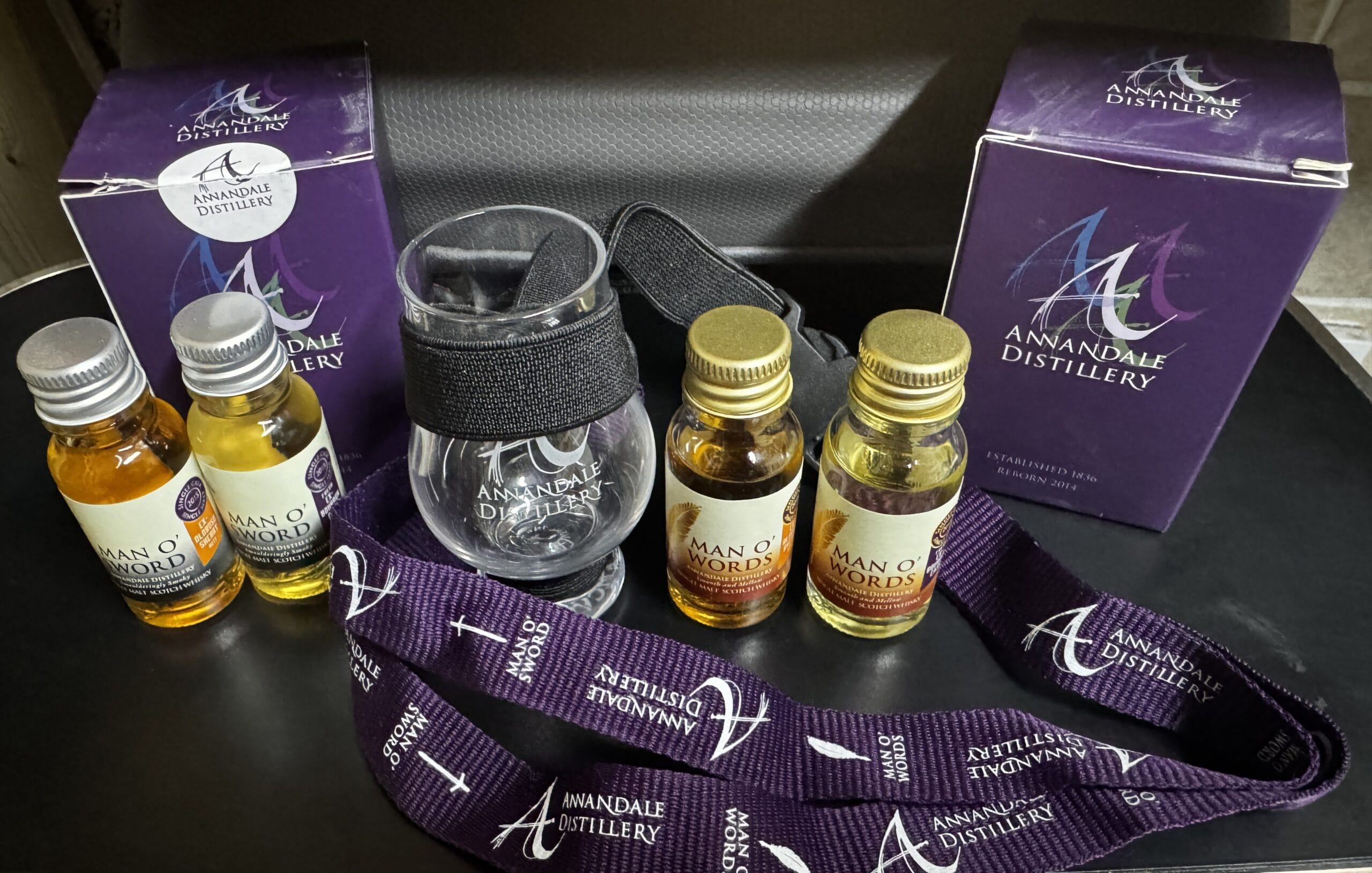
I used this hotel as a base while travelling around southern Scotland, including a visit to the nearby Annandale Distillery in Annan, where I took part in one of the most detailed Scotch whisky distillery tours I have experienced, carrying my usual tech setup in the tech bag I reviewed here. I also stumbled upon Robert the Bruce’s Lochmaben Castle after following a seemingly inconspicuous track to nowhere through some woods, having been alerted by a small blue historic Scotland sign in a roadside hedge. At the end of the dark track I found a car park and the ruins of the castle adjacent to Castle Loch which is the largest and shallowest of the lochs in Lochmaben, Dumfries and Galloway.
Lochmaben Castle was built by Edward I of England in 1298 and was once home to King James IV, Mary Queen of Scots and Robert the Bruce, King of Scots. As Lord of Annandale, he fought to reclaim it from English control. His forces held it after the Battle of Bannockburn before losing it again. Rumour has it that a ghostly creature resembling a ‘walking decomposing corpse’ lurks the woods and castle.
Historical Background of the Crichton Lunatic Asylum and Estate
To understand why the building feels the way it does, the history of the site matters.
The story of The Crichton in Dumfries begins in 1823 with the death of Dr James Crichton of Friar’s Carse. He left his widow, Elizabeth Crichton, a substantial sum of around £100,000 to be used for charitable purposes. At the time, this was an extraordinary bequest with the potential to reshape the town.
With the support of her close friend Reverend Henry Duncan, Minister of Ruthwell Parish and founder of the Trustee Savings Bank, Elizabeth Crichton initially attempted to establish a university-level college in Dumfries. Her aim was explicit. She wanted to provide education for poor scholars and elevate the town’s intellectual standing. That ambition faced resistance and legal obstacles for two decades.
From Elizabeth Crichton’s Bequest to the Asylum Campus
After a prolonged and ultimately unsuccessful campaign, Elizabeth Crichton abandoned the university proposal. Instead, she redirected the bequest towards founding a lunatic asylum on the outskirts of Dumfries. This institution would later become known as the Crichton Royal Institution. Parts of that original asylum complex now form the restaurant and bar areas of the IHG Holiday Inn Dumfries.
Elizabeth Crichton did not view the asylum as a place of confinement alone. She intended it to be a model hospital campus that surpassed others in Europe. Her focus extended beyond medical treatment to architecture, environment, and patient welfare. The estate was deliberately landscaped, and buildings were designed to convey order, dignity, and permanence.
The Wider Crichton Site and the Campus in its Present-Day Use
The Crichton Lunatic Asylum was not a minor institution. It was a vast Victorian asylum campus designed to house and treat patients on a large scale. The architecture, layout, and surviving structures still reflect its institutional purpose. Thick masonry, long corridors, and altered internal spaces remain evident throughout the building.
The most prominent architectural statement on the site is the Crichton Memorial Church. Prominanet Architect of the era Sydney Mitchell designed the church and it was constructed between 1890 and 1897, the church occupies a central position within the 85-acre Crichton Estate. Built as a non-denominational place of worship, it remains the visual focal point of the campus today. Here is my YouTube drone video capturing the church and some of the other buildings on the estate.
The church has since taken on multiple roles beyond its original purpose. It now hosts weddings, graduations, concerts, and public events. It has also appeared in BBC productions, including Songs of Praise, and has served as a filming location. Regular guided history tours, including access to the undercroft and crypt, are run by Mostly Ghostly Tours.
While the estate has evolved, its origins as a Victorian lunatic asylum remain visible in both layout and structure. The buildings that now house university facilities and hotel accommodation once formed part of a vast institutional complex dedicated to mental health treatment. Staying at the Holiday Inn Dumfries means occupying space that carries this layered and uncomfortable history.
This is not a footnote. It is the foundation of the site.
The Crichton Campus Today and Its Reputation
The IHG Holiday Inn Dumfries hotel sits directly beside a multi-institutional university campus which hosts several higher education establishments. These are the University of Glasgow, the University of the West of Scotland (UWS), and Dumfries & Galloway College. The Open University in Scotland and Scotland’s Rural College (SRUC) also has a base there. While it was out of term time during my stay, the tranquil parkland setting felt quiet and spacious. Dumfries town centre is around a twenty-five minute walk away. Another part of the Crichton Campus is Midpark Hospital, a modern dedicated mental health facility.
Experiences like this explain why former institutional buildings frequently feature among haunted hotels in Scotland. Check availability and stay here