My Copenhagen waterfront walking tour took me from the colourful houses of Nyhavn over the bridge to the historic Kuglegårdsvej. Then from the Kuglegården (The Cannonball Yard) around Christiansborg Palace in the heart of the city.
Starting My Copenhagen Walking Tour in Nyhavn
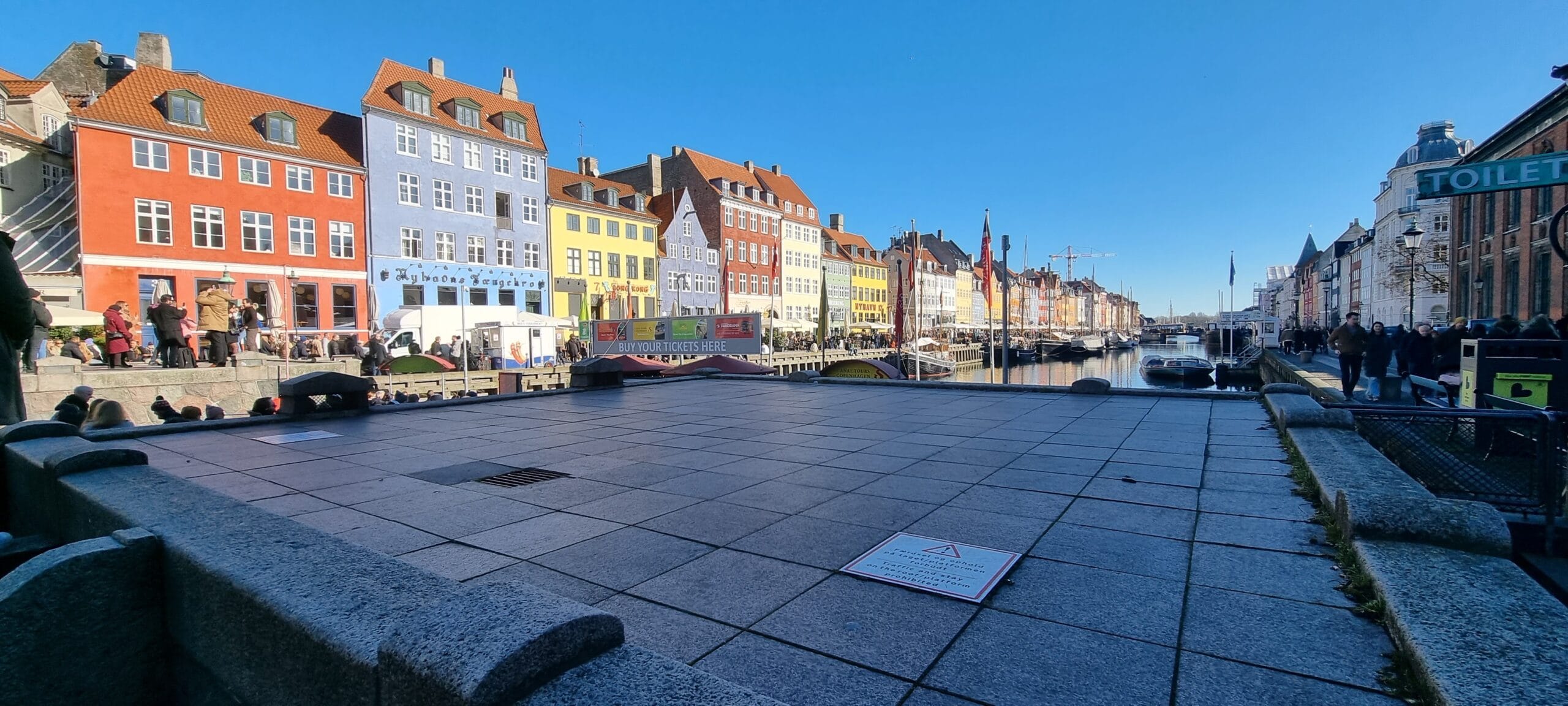
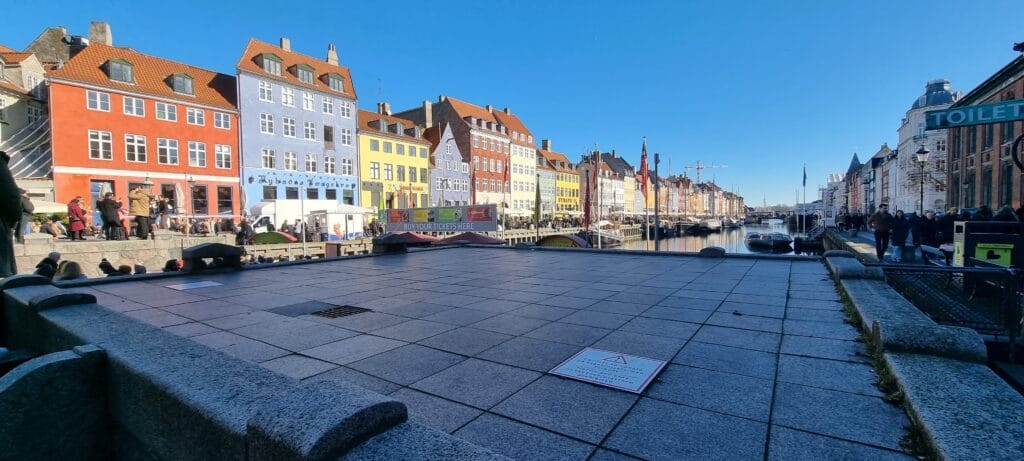
I began my Copenhagen walking tour at Nyhavn, where the harbour is lined with narrow, colourful town houses. Boats bob gently along the canal in front of them. I walked the length of the waterfront, past cafes and old wooden ships moored at the quay. This stretch of Nyhavn is actually a floating museum and veteran ship harbour.
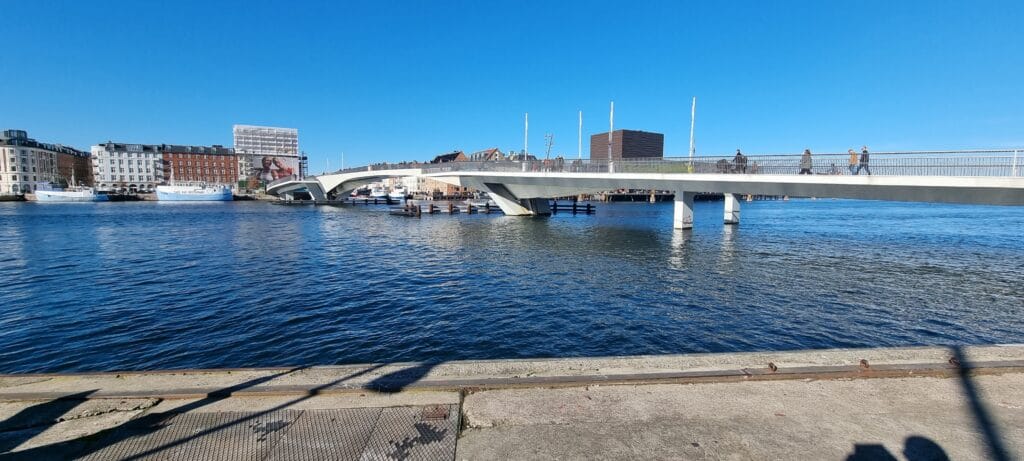
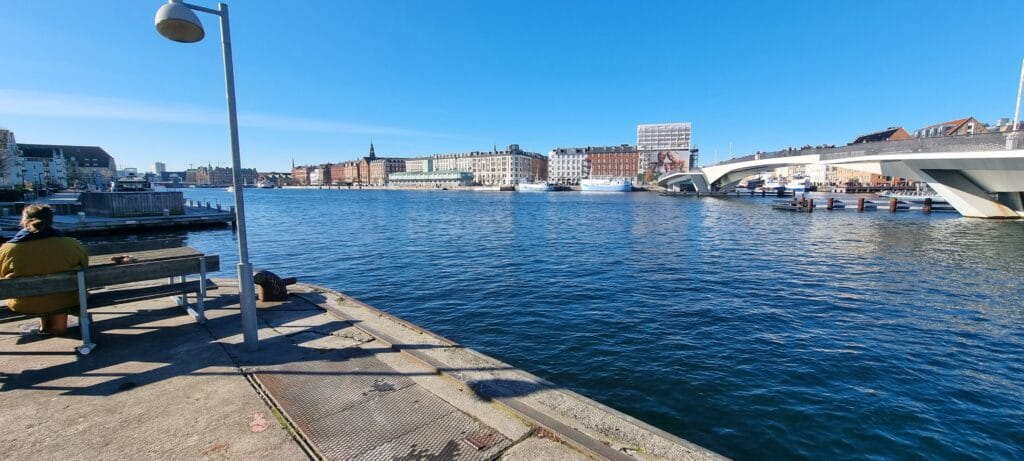
Here, I found out that only vessels of special historical interest are allowed to moor here. Owners must be members or guests of the Danish Association of Wooden Ships to keep a berth. From here I crossed the harbour bridge, looking back for one more view of Nyhavn's coloured facades before continuing on. The crossing gave me a wider view over Copenhagen's inner harbour, with the water stretching out on both sides. It set the tone for the rest of my walk into the older, quieter parts of the city.
The colourful old buildings reminded me of a similar walk I did around Bremen's Schnoor quarter in Germany
Kuglegården: Copenhagen's Old Cannonball Yard
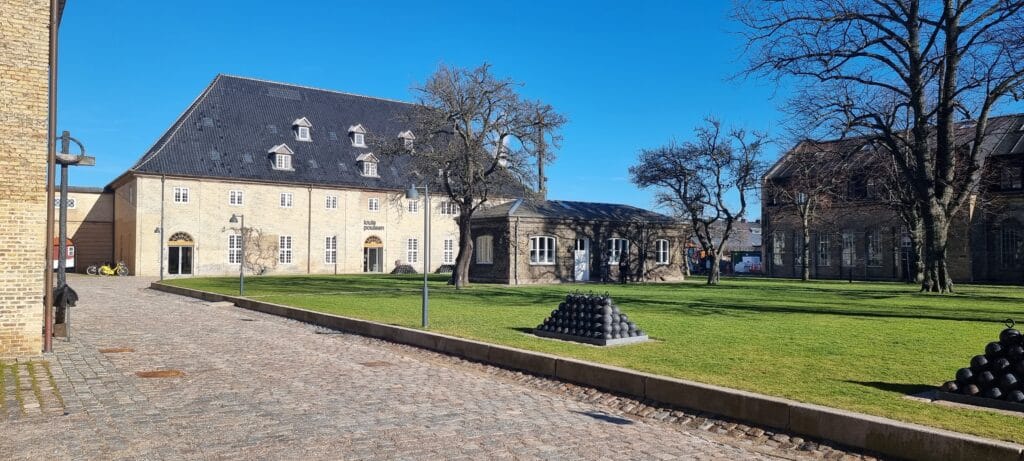
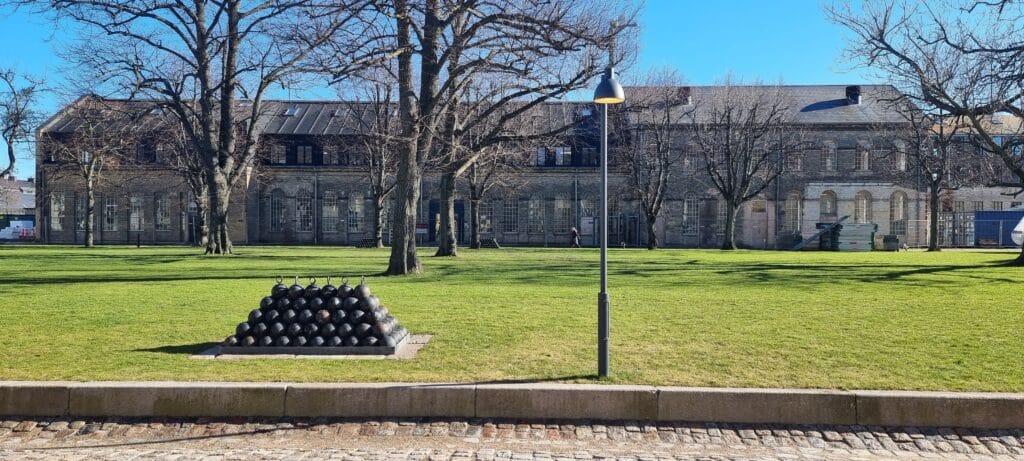
On the other side of the bridge, I found Kuglegårdsvej and the old naval courtyard known as Kuglegården. Stacks of historic cannonballs still sit in neat rows across the yard. Behind them stands the Louis Poulsen building, a clear contrast against the old stone of the yard. Walking through, I noticed how quiet the area was compared to Nyhavn's crowds. It felt like a both a genuine working corner of the city but also I noticed it was home to a number of upmarket design studios and stores selling some really cool Danish furniture designs, rather than a tourist stop, but worth visiting all the same.
This naval history reminded me of visiting Helsinki's Suomenlinna Island historic naval dockyard.
A Bakery Stop During My Copenhagen Walking Tour
After exploring the cannonball yard, I stopped at a bakery on the waterfront called Hart, or its full name on a map is Hart Bageri Holmen, for lunch. I ordered a cappuccino and a freshly made sandwich to go with it. I also picked up a raspberry, lime and pistachio croissant, just because of its brightly coloured organic ingredients and the flavour combination sounded delicious. It made for a good break and a chance to warm up partway through my Copenhagen walking tour. Standing among the stacks of cannonballs afterwards, I got a real sense of Copenhagen's naval history away from the main sights.
Christiansborg Palace Courtyard and the Royal Statue
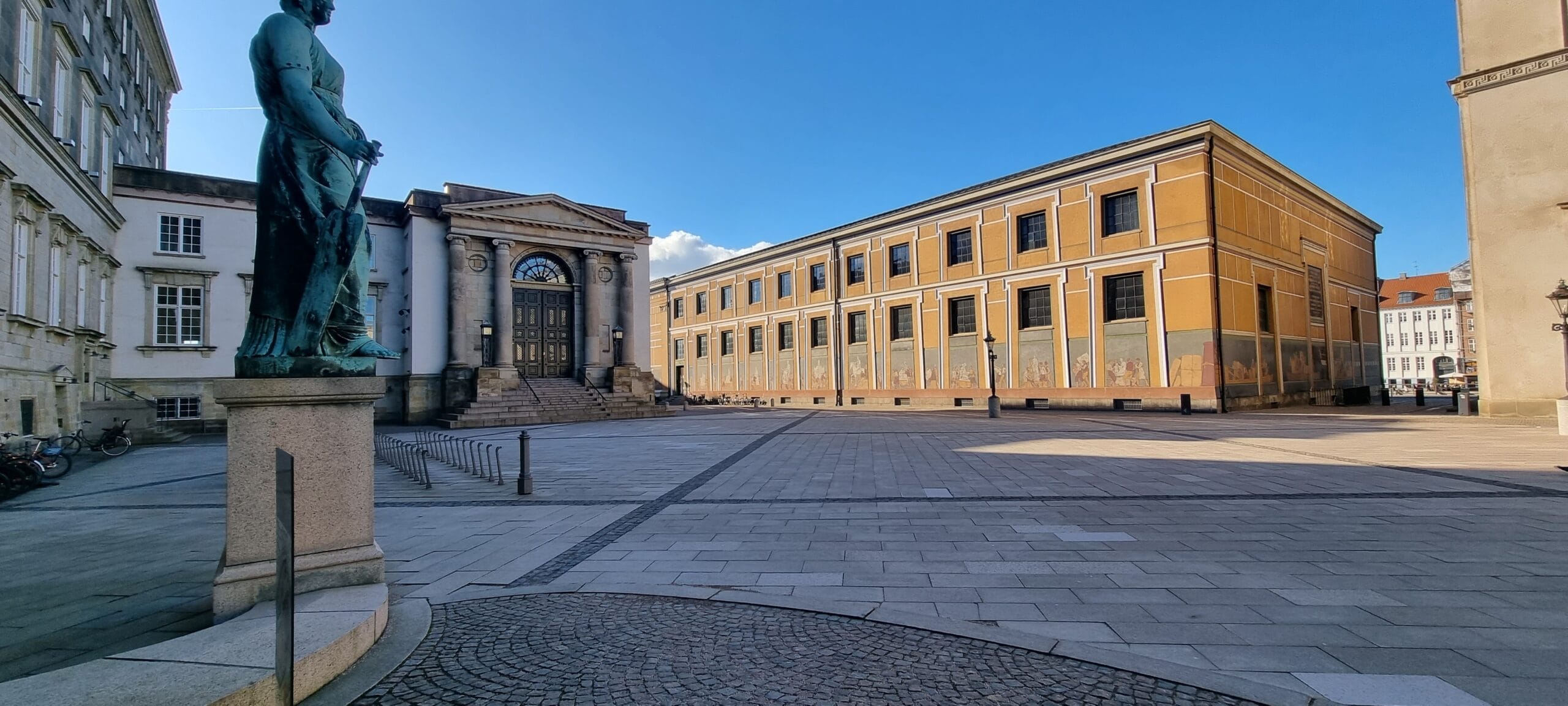
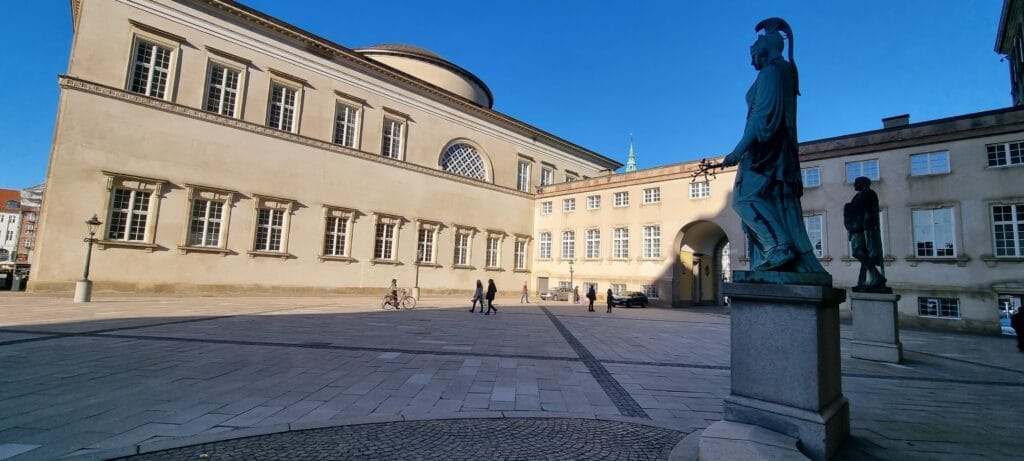
From Kuglegården, I continued round Christiansborg Palace towards its main courtyard. A large statue stands at the centre, giving scale to the surrounding stone buildings. I walked around it slowly, taking photos from different angles to capture the details. The courtyard felt open and formal, very different from the tight lanes of Nyhavn.
Christiansborg is still a working palace, home to the Danish Parliament, Supreme Court and Prime Minister's Office. Standing in the courtyard, that mix of history and current government use was hard to miss. Which reminded me of exploring the old town during my own 48 hours in Riga, Latvia trip.
The Royal Stables and Ridebane at Christiansborg
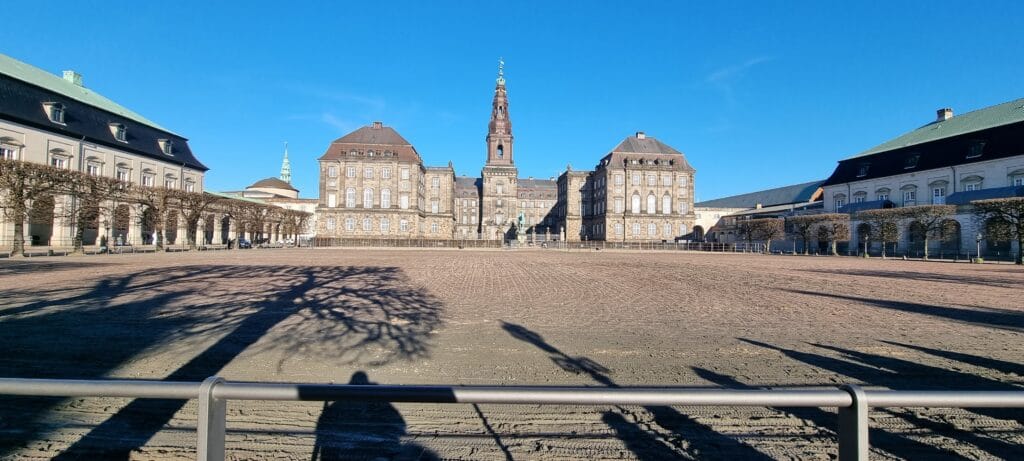
Next I walked to the ridebane, the large old riding ground next to the Royal Stables, not dissimilar to a very large modern equestrian riding manège or arena. The cobbled square opens out in front of the stable buildings, giving a real sense of scale. I could picture the horses and carriages that would have used this ground centuries ago or for modern parades.
It is a quieter section of the palace grounds, away from the main courtyard crowds. Walking across the cobbles, I slowed down to take in the surrounding architecture properly.
Inside Christiansborg's Royal Reception Rooms
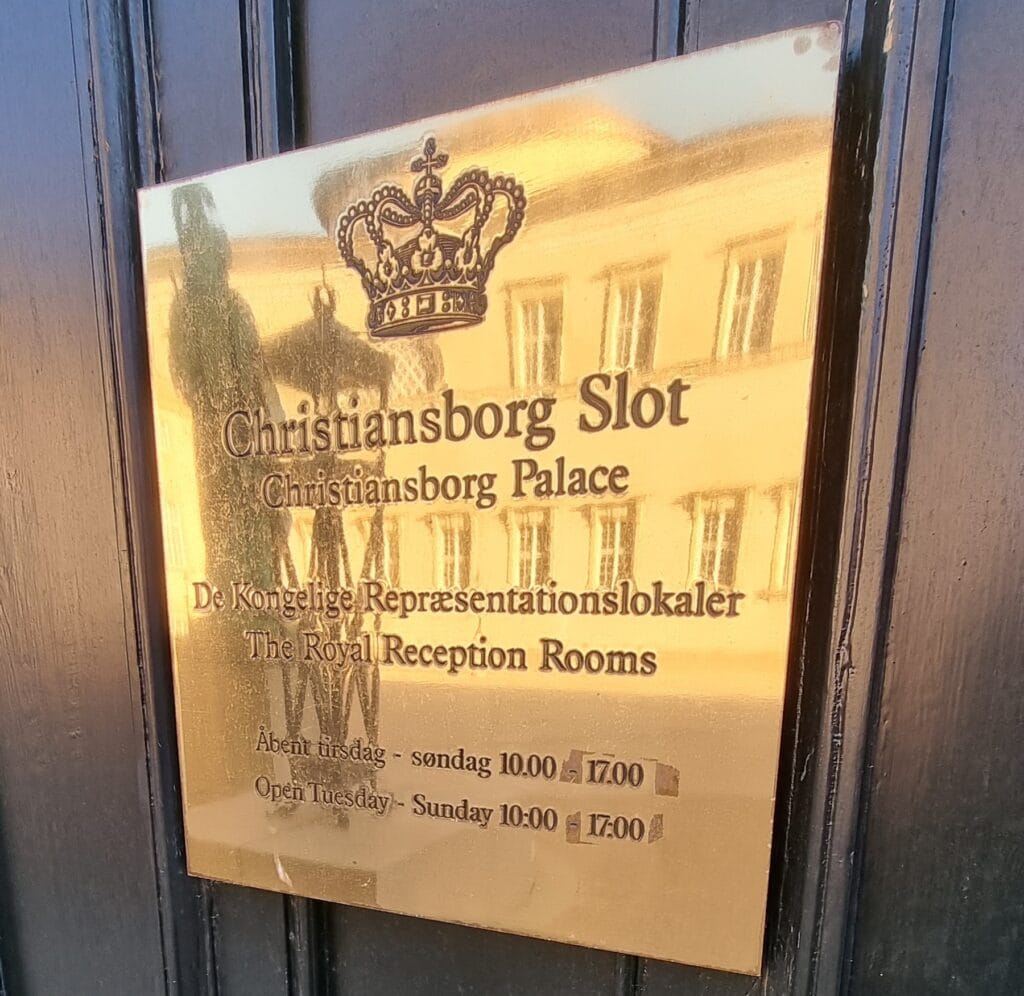
I also went inside to see the Royal Reception Rooms, used for official state functions. I got in using a Copenhagen Card, which I had bought in advance. The rooms are covered in detailed tapestries, gilded decoration and high painted ceilings. Walking through room after room, I could see how each one is used for a different formal purpose. Photography inside the rooms themselves was not allowed during my visit. Instead, I took a photo of the brass door plate with the room's name on it. This part of Christiansborg gave me the clearest look at how the working palace still functions today.
My Copenhagen Walking Tour: Practical Information
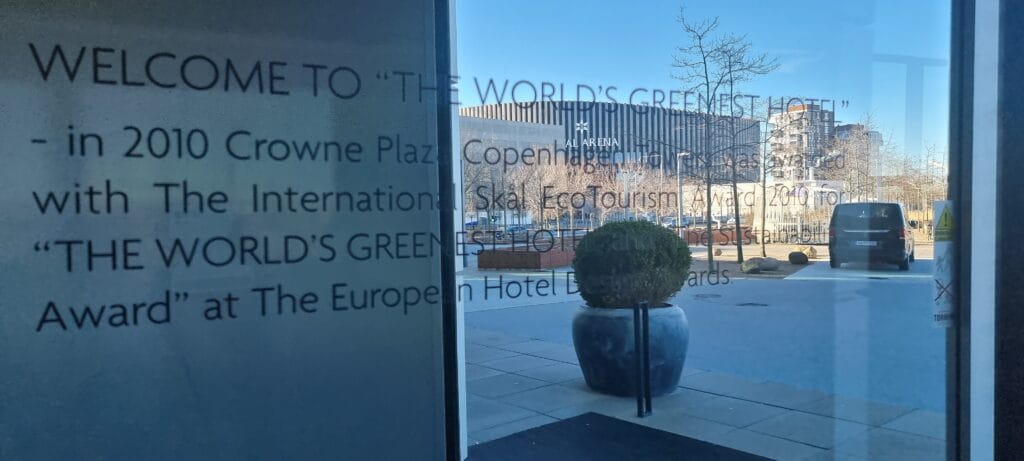
I stayed at the Crowne Plaza Copenhagen Towers by IHG for this trip. It sits a short distance from Copenhagen Airport, or Københavns Lufthavn, by regional DSB train. From the airport, it is just two stops to Ørestad Station. A two minute walk from the station brings you straight to the hotel. The hotel sits next to the Royal Arena, Four Points Flex by Sheraton and the budget CABINN Metro Hotel.
I had access to the Crowne Plaza Club Lounge for this stay. The lounge stayed open 24 hours a day, offering beers, soft drinks and hot drinks alongside nuts and crisps. Each evening at set times, I helped myself to red and white wine, along with tapas, breadsticks and mini cakes
To reach the city centre, I walked the short distance from the hotel, back over the bridge to Ørestad metro station. From there, the M1 line gave me direct access into Copenhagen city centre. I used my Copenhagen Card for this journey, bought before the trip. A Copenhagen Card can cover both museum entry and metro travel like this. Unless you plan to visit several museums across your whole trip, it probably is not worth the cost. The metro alone is cheap enough to pay for individually anyway.
Booking accommodation just outside the centre and travelling in worked out far more cost effective for me. The above ground metro train was clean and punctual throughout my trip. It took only ten minutes and six stops to reach the city centre.
If you feel particularly energetic, you could walk from the hotels instead but it is around 6.4km. That would take roughly 1.5 hours via Ørestads Boulevard, providing you don't stop at every colourful coffee shop you see on the way. I flew into Copenhagen from Manchester Airport with easyJet in February. I found that it was bitterly cold in Copenhagen at that time of year, though there was no snow on the ground. Make sure you don't underestimate the Nordic weather.
FAQ's
Yes, Nyhavn is completely free to walk around, since it is an open public harbour-front street. I spent around thirty minutes wandering along both sides. Most visitors seem happy with somewhere between twenty minutes and an hour, depending on how many photos you take.
Yes, the main courtyard, ridebane and statue at Christiansborg Palace are free to walk around. I explored this area without buying any ticket at all. I later used a Copenhagen Card, bought in advance, to see the Royal Reception Rooms.
The fastest way is the metro or regional DSB train, both running directly from the airport. I took the DSB train just two stops to Ørestad Station instead. From there, the M1 metro reaches Copenhagen city centre in around ten minutes. A Copenhagen Card covers this metro journey too. It is usually only worth buying if you plan several paid museum visits during your trip.
Kuglegården is an old naval courtyard on Kuglegårdsvej, once part of Copenhagen's historic dockyard. Stacks of real cannonballs still sit across the yard today. I found it a quiet, little-visited spot compared with Nyhavn and Christiansborg nearby.