Introduction
Welcome to my aspie’s guide to Japan Rail Pass.
My trip to Japan was planned relatively meticulously in advance. Towards the end of my week long trip, I knew that I had to be in the Chiba City area of Tokyo for a couple of days to attend an exhibition at Makuhari Messe Exhibition Halls. However, I also wanted to make the most of a short 7 day trip to visit Japan.
So I used the benefits of the rail pass to plan my journeys to Hiroshima to visit the Atomic Bomb Dome, to see the Kyoto Tower and eat a wagyu burger at NickStock and conveyor belt sushi at Daikai Suisan in the Kyoto Tower Sando Food Hall, to get to the BnA Wall Art Hotel in Nihonbashi, which are all easily reached using Japan’s extensive rail network.
This article may contain affiliate links. If you purchase through these links, we may earn a small commission at no extra cost to you.
Here I will outline what I managed to learn about the Bullet Train (Shinkansen) network in such a short trip. Although realistically and from my own experience on this trip. I would recommend at least a 21 day trip to Japan to fit everything in, that you might like to see without feeling too rushed.
As despite the bullet trains being fast and running like clockwork, it still eats up time getting in and out of super busy stations and travelling between cities. I recommend you get a Green Car Pass for the extra space, more below.
Purchasing a Japan Rail Pass in Advance


The Japan Rail Pass cannot be purchased in Japan, you must get them online from your home country in advance of your trip, they can be purchased for 7-days, 14-days or 21-days.


Therefore, you will need to weigh up the pro's and con's of whether a JRPass is suitable for your trip, how much rail travel you will do and whether or not to purchase individual journey tickets for each leg of your journey. (for example if you plan to stop at every station between Tokyo and Osaka to explore, there is no point getting the Nozomi shinkansen as it will not stop at all of those stations, therefore a slow train service would be more suitable for you). Regional JRPasses are also available, for example if your trip is only in the region of Hokkaido in Northern Japan, you would be better off with a regional JRPass not a national JRPass
JRPass Meet and Greet Service
As an Aspie traveller, who doesn't speak Japanese, before writing this Aspie’s Guide to Japan Rail Pass I decided to try out the JRPass Meet and Greet (M&G) service which was pre-purchased with the JRPass. I was met at Narita Airport [NRT] arrivals by a chap holding a sign with my name on it, he said he was from Bangladesh and spoke fluent Japanese, he was friendly and attentive (apologies I cannot remember his name).
He basically became my guide for around two hours, helping me find a cash machine, helping me exchange my JRPass coupon letter for the physical Japan Rail Pass tickets. As well as booking seat reservations, explaining how to use the rail ticket machines, helping me when the initial ticket got spat out of the ticket barrier entry gate, and getting it replaced with a new one.
The Meet and Greet (M&G) service is available at Haneda Airport, Narita Airport and Kansai Airport.
Welcome Suica Cards


The local guide from the Meet and Greet service advised me to buy a ‘Welcome Suica' card upon arrival. These cards, typically red for Welcome Suica and Green as a more permanent Suica like London's Oyster Card. You can use the cards at any location displaying an A, B, or IC logo.


As I explain in this guide, you must pre-load a Suica card with Japanese Yen. You can top it up as needed, but it remains valid for only 28 days. If you do not use the full amount you pre-load, you essentially lose the remaining balance. You can also use the card to pay for buses, metro and subway rides, and purchases at vending machines across Japan, which sell hot and cold drinks, snacks, toys, and more.
My Meet and Greet guide advised me to load a minimum of ¥3,000 onto the card. (but pushed towards ¥4,000). However, I pre-loaded ¥2,000, but, even for one person on a 7-day trip that was too much.
Using Suica Cards at Vending Machines in Japan
These three vending machines sell snacks and bento boxes, ice creams, and even cans of hot coffee, which genuinely surprised me. Elsewhere, I also saw machines selling anime products, Japanese toys, fresh eggs, hot ramen, umbrellas, batteries, face masks, and beer.


I don't think the guide was on a commission to pre-load the card with more Yen. But if you are somebody who drinks a lot of fizzy drinks from vending machines. Then even ¥2,000 goes a long way, as the drinks cost circa ¥120 to ¥180. Depending on what you buy, for example, Pocari Sweat is an electrolyte drink, typically around ¥160 in vending machines, and I mention electrolyte support in my hydration travel guide. When I left Japan, I gifted my Welcome Suica card to the airport check-in girl with its remaining ¥1,460 balance left on it!.
Using the Japan Rail Pass
With this Aspie’s Guide to Japan Rail Pass article in mind, I pre-booked a Green Car Japan Rail Pass. The Green Car is essentially the First Class/1st Class carriage or carriages on the Shinkansen trains. I travelled on a standard car for an unreserved train once. I can now see what the differences are. The Green Car seats are more comfortable, less crowded and they are both wider and have a greater pitch. They also recline a fair way without annoying the passenger behind you.
Green Car Benefits
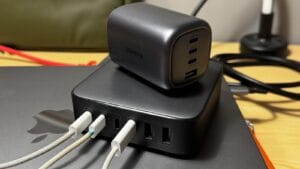
In addition, Green Cars provide seat power outlets with USB-A and USB-C ports for charging phones and laptops. As a result there is also WiFi available on the trains. However as it's a public open WiFi connection. I have also prepared a guide for the reasons why you should use the Best VPN for Travel. I have used NordVPN for 8+ years and highly recommend it. A train host brings a sealed wet-wipe (this wet-wipe thing is quite common in Japan). Although I am not sure what the wet-wipe's purpose is. Other than for anything more than advertising the company branding on the packet. Not even the coffee is free of charge in the Green Car (First Class). There is however, an onboard smoking room for Green Car passengers if you smoke or vape, and toilets.
Japan Rail Pass Guide to Shinkansen Line Names
Nine high-speed Shinkansen lines operate across various regions of Japan: Tokaido, Sanyo, Tohoku, Akita, Yamagata, Joetsu, Kyushu, Hokkaido, and Hokuriku. Approximately 1,000 Shinkansen trains service these lines daily, necessitating advanced seat reservations and attention to carriage number entry gates.
How to Board the Bullet Trains (Shinkansen)
I suggest you position yourself with proper alignment with the designated entry gate on your ticket. Marks on both the platform and overhead gantry signs guide passengers, ensuring they board the correctly named train successfully. You only have 60 seconds to get on, halved if passengers are getting off. These trains do not wait for people running down the platform!.
How to Understand Japan Rail Pass Shinkansen Gantry Signs
Bilingual gantry signs in Japanese and English facilitate this process. Despite the prevalent language barrier, as most Japanese citizens do not speak English.
For example the gantry may say:
Platform 14:
- Nozomi 215, 11:33 Shin-Osaka, Non-Reserved Car No 1-3
- Hikari 505, 11:43 Okayama, Non-Reserved Car No 1-5
- Nozomi 129, 12:16 Hakata, Non-Reserved Car No 1-3


Prior to my journey, advertisements highlighted certain exclusions from the JRPass, specifically the Nozomi and Mizuho trains, which are the network's fastest. However, I learned during my trip from a bilingual British tourist. That these trains have become accessible for a small supplementary fee, offering a significant time-saving option.
Crucially, the JR Pass encompasses all Shinkansen trains, including the Nozomi and Mizuho on the Tokaido and Sanyo lines. However, the Nozomi and Mizuho are contingent upon buying a supplementary ticket. This new integration transforms the JR Pass. Into a comprehensive tool for efficient and seamless travel, throughout Japan's extensive high-speed rail network.
Additionally, I stayed at and reviewed the Hotel Indigo Tokyo Shibuya, which worked well as a base when arriving in Tokyo by train.
Please consider subscribing to my YouTube channel. If you enjoyed my content, I'd appreciate a like, comment or share. The Japan Playlist is where to see more trip videos and other content.