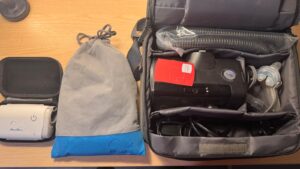
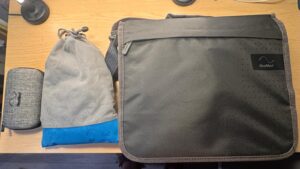
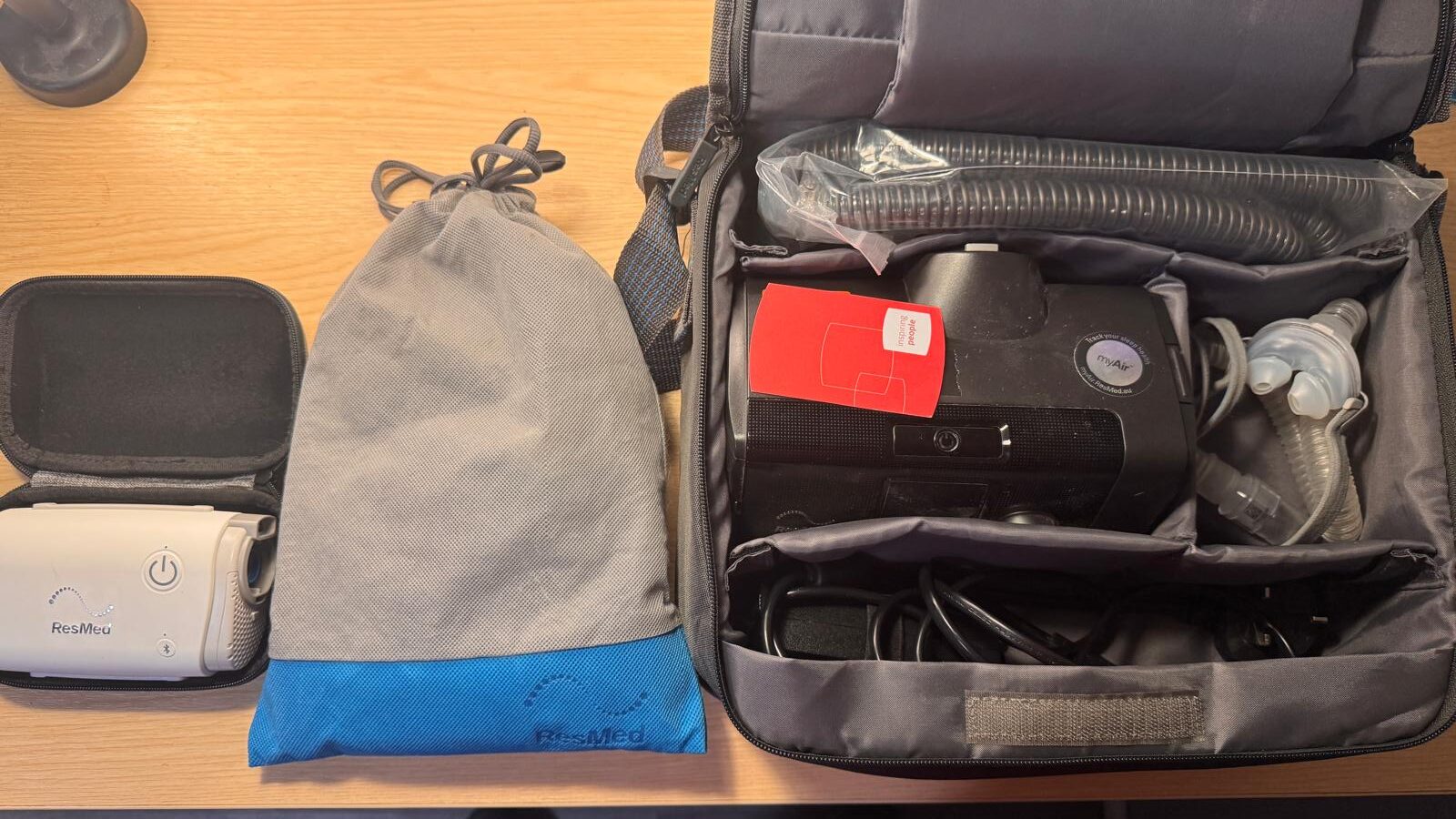
I made free printable CPAP luggage tags, because every CPAP bag looks identical in an overhead locker.
Why CPAP Bags Get Mixed Up
Almost every CPAP travels in the same thing, a small black or grey case. Naturally, airlines encourage that, because the machine belongs in the cabin rather than the hold. As a result, the overhead locker fills with identical bags. Then, at the gate, someone stands up, takes the nearest grey or black case and walks off with your therapy for the week.
The security tray is worse. After all, you send the machine through in its own tray, and then you collect your shoes and your laptop while three other people do exactly the same thing a metre away. Meanwhile, nothing on your case says it is yours.
Replacing one abroad is no small thing either. For a start, most countries want a prescription first. Worse still, your settings live on the machine that just left the airport.
Download the Free CPAP Luggage Tag
Pick your language below. Every file prints a CPAP luggage tag in six colours, so you can choose one nobody else on your flight will be carrying.
Each tag finishes at 85.6 by 54 mm, which is exactly the size of a credit card. Therefore it drops straight into a standard luggage tag holder, or into a spare slot in your wallet. Better still, you cut once and fold once, so there is no glue, no laminating and no second piece to line up.
Before you fly, also check what your airline publishes about carrying a CPAP on board.
For help with the rest of your trip, such as batteries, security and hotels, see my CPAP travel guide.
What the CPAP Luggage Tag Says, and Why It Matters at Check-In
On the front, two lines do the work. “Medical Equipment” sits large enough to read at arm’s length, and underneath it you get “CPAP, do not separate from owner”. On the back, meanwhile, the tag argues your case for you, because it explains that the machine treats sleep apnea, that it counts as medical equipment, and that it should travel in the cabin with its owner.
Even so, be clear about what that achieves. It persuades rather than compels. After all, most airlines carry a CPAP free as a concession rather than because the law obliges them, and I set out exactly who publishes what in my CPAP airline policy comparison. In the US, however, the Department of Transportation goes further, since assistive devices have priority for in-cabin storage space over other passengers’ items, and it names CPAP machines directly.
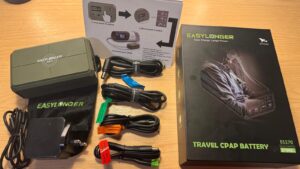
Finally, there is a line for your battery’s watt-hour rating. That matters more than people expect, since it is the one number a check-in agent can genuinely refuse you over.
How to Print It So It Actually Stands Out
So you have two sensible routes. Either print the coloured version on white card and accept ordinary colours, or print the white version onto neon card instead. The second costs very little, and it looks far brighter than anything a printer manages.
Whichever you choose, use card rather than paper. 160gsm or heavier survives a trip, whereas ordinary paper turns soft by the second airport. Afterwards, slip the folded tag into a clear plastic holder, because rain, spilled coffee and baggage belts all finish off a bare card quickly.
Filling It In Without Giving Away Too Much
So you have two sensible routes. Either print the coloured version on white card and accept ordinary colours, or print the white version onto neon card instead. The second costs very little, and it looks far brighter than anything a printer manages.
Whichever you choose, use card rather than paper. 160gsm or heavier survives a trip, whereas ordinary paper turns soft by the second airport. Afterwards, slip the folded tag into a clear plastic holder, because rain, spilled coffee and baggage belts all finish off a bare card quickly.
What the QR Code Does
Every tag carries a QR code, and it opens my CPAP travel guide. In practice, it serves two different people. A gate agent or check-in agent can scan it and read what airlines actually publish about carrying a CPAP. Meanwhile, another CPAP user who spots your tag can scan it, find this page and print their own.
Deliberately, the code points at a page rather than at a file. Pages get updated, after all, whereas downloads do not.
Is a Paid CPAP Luggage Tag Worth It?
The Sleep Apnoea Trust sells a printed medical equipment tag for £10, and the charity does good work, so buying one supports that. However, two things limit it. Firstly, only members can buy it, which rules out most of the people who need one. Secondly, it prints your name and phone number permanently onto the card.
Mine, by comparison, costs nothing, comes in nine languages, and lets you replace it the moment your details change. So support the charity if you want to support the charity. Even so, do not pay £10 purely for a tag.
Other Ways to Stop Your CPAP Bag Being Taken
A tag helps, although three other habits help more.
- Break up the grey/black. A brightly coloured strap, a ribbon, or even gaffer tape across the handle makes your case findable in a locker at a glance.
- Put a tracker inside the case. An AirTag or a Tile costs little, and it tells you whether your machine has left the airport in somebody else’s hand luggage.
- Photograph your own bag before you fly. Showing a picture at a lost property desk beats describing a grey or black case to someone who has already heard that description forty times today.
Then, if the worst does happen, your tag gives whoever picked it up a way to reach you, and a reason to care.