Finding a clear CPAP airline policy should be simple, but it isn’t. Like most sleep apnea travelers, I grew tired of searching, because the same answer came up every time. Somebody on a forum says their flight was fine, but somebody else had to pay, and neither links to anything.
This article contains affiliate links and we may earn a small commission if you make a purchase through them. At no extra cost to you, this helps with the running costs of this blog.
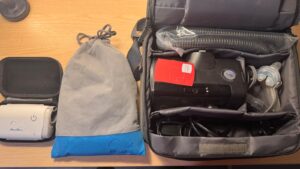
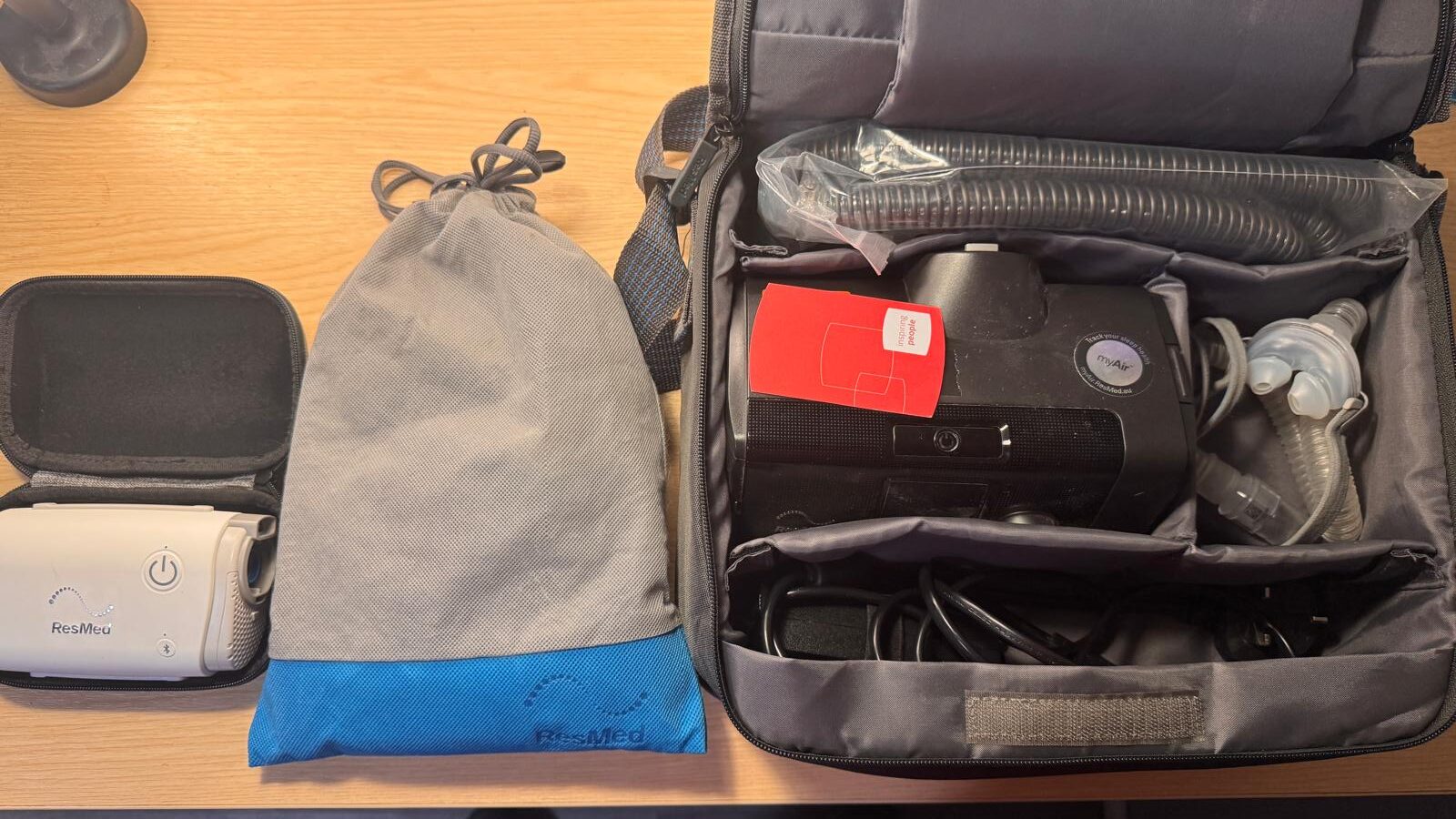
To begin with, almost nothing below depends on which machine you own. Airlines write their rules around a category, such as CPAP, and therefore your model number rarely comes into it. However, where a carrier does publish a device list, I have flagged it, because those catch people out. I fly with a ResMed AirMini myself, although you’ll find that barely matters here.
Altogether, I approached 74 carriers across the UK, Europe, North America, Asia-Pacific, the Middle East and Africa. Seventy-one of them appear in the tables below, and in each case I quote the airline rather than summarize it. I also name the page every statement came from, so you can check it yourself.
CPAP airline policy varies far more than travelers assume, and several carriers publish nothing at all. Three of the seventy-one say nothing about CPAP, while three more publish general medical wording that never names the machine. Seven others I could not read, because their pages build content in the browser rather than serving it as text. For that reason, I list those seven separately rather than pretending they are silent.
The Four Questions Any CPAP Airline Policy Must Answer
Before the tables, it helps to know what you are looking for. Every CPAP airline policy covers four separate questions, and carriers frequently answer one while ignoring the others.
Does it travel on top of my baggage allowance, and is it free? Most travelers assume yes. Many airlines do say yes. However, a surprising number never address it, and at least two put medical equipment inside your allowance while exempting mobility aids. Whichever applies, label the bag before you fly — my free printable CPAP luggage tag comes in nine languages, each with six colours to choose from.
Do I need medical clearance? This answer varies most, since some carriers say you need nothing, while others want a doctor-completed form days in advance.
Can I use it in the air? Carriage and use are different questions, and different pages govern them. An airline that happily carries your machine may demand separate approval before you switch it on.
Will there be power? Almost every airline tells you to bring a battery. Only a handful publish what their sockets actually deliver.
CPAP Airline Policy in the UK, Ireland and Europe
UK and Ireland Airlines
| Airline | On top of allowance? | Notice | Clearance | In-flight use |
| Aurigny | Yes; “in addition to their cabin baggage allowance” | Not published | Doctor’s letter “required for security clearance” | Not published |
| British Airways | Yes — “as an extra piece of hand-baggage without charge” | None stated | Not required | Permitted except taxi, take-off, approach, landing |
| Virgin Atlantic | Yes — “in addition to your hand luggage allowance, whether you are using it onboard or not” | 72 hours | Approval required; pre-approved model list | Battery only; no humidifier |
| easyJet | Yes, within 56 × 45 × 25 cm. “Free of charge” not published | 48 hours | Not required | Not published |
| Jet2 | Yes, within 56 × 45 × 25 cm | 48 hours | Not required | Not published |
| Loganair | Yes; “without it counting toward your baggage allowance” | Not published | Not published | Not permitted: “it cannot be used during the flight”; batteries removed, no exit row |
| Ryanair | Yes, free — with a medical baggage waiver letter | None for carriage | Not for carriage; Fit to Fly form to use | Prior approval required |
| TUI | “We’ll carry it free of charge” | None stated | Letter recommended | Not published |
| Aer Lingus | Not published | 48 hours general | Not required | Permitted — but BiPAP use is not |
Western and Southern Europe Airlines
| Airline | On top of allowance? | Notice | Clearance | In-flight use |
| Lufthansa | Yes, as a personal item | Register to use | Not to carry; register to use | Battery only |
| Air France | Not published | 48 hours | Not required | Permitted on battery; aircraft power may not be used |
| KLM | Not published | None for CPAP | Not required — its form is oxygen-only | Permitted; aircraft power may not be used |
| Transavia | In hand luggage, no notice needed (max 10 kg, 40 × 30 × 20 cm) | None if it fits hand luggage | Medical certificate if it does not fit | Use in flight not permitted |
| Vueling | Yes — “in addition to their hand luggage, at no extra cost” | None stated | Not required | Permitted, no exit row |
| SWISS | Not addressed | None stated | Technical authorisation required | Off during taxi, take-off, landing |
| Eurowings | Yes | 72 hours to use | Not to carry; certificate + registration to use | Battery only |
| Air Europa | Yes, free, under 23 kg | 48 hours | Certificate within 10 days to use | Permitted with certificate |
| Iberia | Yes; “In addition to your hand luggage”, “at no additional cost” | None stated for CPAP | Not required; “without special authorisation”, if it runs on batteries | Permitted on battery only; under the seat in front, no aircraft sockets |
Northern and Eastern Europe Airlines
| Airline | On top of allowance? | Notice | Clearance | In-flight use |
| Wizz Air | Not published | 48 hours | Not to carry; Fit to Fly form to use | Form must be under 6 days old |
| Norwegian | Not published | At the airport | May be required to use | Permitted |
| SAS | “Free of charge”, but not stated as additional | Not published | Not required | Not published |
| Finnair | Yes, within 55 × 40 × 23 cm and 12 kg | 48 hours to use | Assistance form, not MEDIF | Permitted |
| airBaltic | Yes — one extra bag free, with a doctor’s note and advance notice | 48 hours | Doctor’s note for the free bag; battery specs mandatory | Permitted except takeoff and landing; battery only, no onboard charging |
| LOT | Not published | Tell them in advance to use | Expressly exempt from MEDIF | Battery only |
British Airways Publishes the Clearest Answer in Europe
British Airways states flatly that “Medical clearance is not required to travel with or use a CPAP Machine for sleep apnoea on board our aircraft.” It also publishes an actual power figure, which almost nobody else does.
Air France Splits Its Rules Across Two Tables
You need to read both, because either one alone gives you the wrong answer. One table covers “Personal medical devices that operate solely on external power sources (outlet, USB, etc.)”, and marks those “Yes, but use on board is prohibited”. The other names CPAP directly, alongside defibrillators and nebulisers, and permits it in cabin and hold with no prior approval below 100 Wh.
The two tables differ because of how your machine gets its power, rather than whether you may bring it.. Air France states that “The power outlets on our aircraft may not be used to plug in personal respiratory devices.” So you cannot run a mains-only machine in the air, although a battery-powered one runs fine.
Its respiratory page confirms that such devices “can be used throughout the entire flight”. It asks for battery life of “at least one and a half times the duration of your flight”, and wants 48 hours’ notice.
Carriage and Use Are Separate Permissions
Ryanair, Wizz Air, Lufthansa, SWISS, Eurowings and Air Europa all carry your machine without fuss. However, each then imposes a separate requirement before you switch it on. Wizz Air sets the tightest timing: its Fit to Fly form “must be issued within 6 days of the flight date.”
Air Europa words the distinction most helpfully. You need a certificate issued within 10 days to use the device. But “if it is not going be used during the flight, no certificate will be required.”
Virgin Atlantic Runs the Strictest CPAP Airline Policy in the UK
It is also the only UK carrier publishing an approved device list. Every medical device “must be submitted to Virgin Atlantic’s Accessible Travel team for approval at least 72 hours before departure”, and it “reserves the right to deny boarding if a required medical device has not been submitted for approval in advance”. Its pre-approved list does include the ResMed AirMini, AirSense 10 and AirSense 11.
Virgin Atlantic also sets conditions on power and humidifiers that are worth knowing in advance. Aircraft power is out: “CPAP machines can’t be plugged into the aircraft’s power supply.” Batteries also “can’t be recharged during the flight”, and cover must reach 150% of the journey. Finally, it states that: “Humidifiers and static inverters can’t be used with CPAP machines onboard.”
Its battery caps beat the international baseline for strictness. Spare batteries under 100 Wh are limited to five per passenger, power banks to two. If hitting 150% would need more than five, you must seek approval first.
Transavia Does Not Allow In-Flight Use, Unlike Air France and KLM
Same group, same aircraft, different answer. Air France and KLM both permit CPAP use in flight on battery power. Transavia, which is owned by the same group, says it is “not possible to use your CPAP device during the flight”. The Netherlands carrier Transavia flies 737-800s, the same type KLM operates. Transavia also flies A320neos and A321neos, from the same family Air France flies. So the aircraft cannot be the reason.
Low-cost subsidiaries strip out the medical desk, the clearance handling and the crew procedures their mainline parent maintains. That is a cost decision, and passengers meet it as a rule.
Transavia does carry the machine without fuss, although you cannot switch it on.. It fits hand luggage at “max. 10 kg, max. 40 × 30 × 20 cm” and needs no advance notice. A larger device goes through its Service Centre, “packed separately”, with a medical certificate.
airBaltic Reviews Your Battery Before it Approves Anything
airBaltic wants more detail than any other airline here. You must give “a detailed description of the device and any batteries it uses when notifying airBaltic”, and it says plainly why: “This information is mandatory for approval. Not all types of batteries are permitted in the cabin, and we need to review the specifications and battery capacity in advance.”
Two of its limits bite harder than the international baseline. Only two batteries travel in hand luggage, where IATA permits up to twenty under 100 Wh. And no charging happens on board at all, so the machine runs on battery for the whole flight. Carry-on size caps at 55 x 40 x 23 cm.
The free extra bag carries conditions: “You can bring one extra carry-on bag for medical equipment, free of charge, if you have a doctor’s note and informed us in advance.” So unlike British Airways or Emirates, the concession is not automatic.
One Warning for BiPAP Users
Aer Lingus is the most permissive carrier in Europe for CPAP, with a device table marking it permitted to carry, permitted to use and permitted in the hold. However, the same table marks BiPAP use on board as not permitted. If you use a BiPAP rather than a CPAP, read that table rather than assuming the CPAP row covers you.
CPAP Airline Policy in North America
| Airline | On top of allowance? | Notice | Clearance | In-flight use |
| United | Yes — CPAP named, “with you for free” | 48 hours to use | Medical certificate to use; none to carry | Permitted with FAA label |
| American | Yes — CPAP named in the exempt list | “As far in advance as possible” | Not published for CPAP | Not published for CPAP |
| Delta | Yes — “additional items at no extra charge” | None for CPAP | Not required | Permitted; label required |
| Alaska | Yes; CPAP named, “without counting toward your carry-on limit”, if the bag holds only medical items | None; “We no longer require advance notice” for a PAP machine | Not published for CPAP | Permitted; PAP machine named |
| Southwest | Not published | Not published | Not published | Not published |
| JetBlue | Yes, per its Contract of Carriage | Not captured | Not captured | Permitted, CPAP named |
| Air Canada | Not captured | 48 hours | Prior approval required | With approval |
| WestJet | Free, but counted in carry-on | Not fixed | Not required | Not during taxi, take-off, landing |
| Porter | Yes — “free of charge in addition to the standard baggage allowance” | Not published for CPAP | Not published for CPAP | Permitted |
| Frontier | Yes — “without charge” | Not published | Expressly not required | Permitted |
| Sun Country | Yes; CPAP named, “at no cost”, if the bag holds only medical equipment | Not published | Not published | Not published |
| Spirit | Yes — CPAP named by name | Not published | Not published | Not published |
| Hawaiian | Not captured | Not captured | Required — physician form | Governed by that form |
| Allegiant | Yes — CPAP named | None stated | Not required | Permitted |
United Draws the Clearest Carriage-Versus-Use Line
United carries a CPAP free — “You can bring the following devices with you for free: Ventilator, Respirator, CPAP machine” — and permits use on any United or United Express flight, provided the machine carries a manufacturer’s FAA label.
Using it, however, needs paperwork: “please send your medical certificate at least 48 hours before departure. You don’t need a medical certificate if you don’t plan to use your respiratory device.” United also sets the most demanding battery rule I found. The 150% figure must cover connections, layovers and airport time. Its own worked example: “A 3-hour flight x 1.5 = 4.5 hours. Add a 2-hour layover and you will need a total battery life of 6.5 hours.”
Frontier Publishes the Clearest CPAP Airline Policy Anywhere
Frontier asks for no form and adds no conditions, as its page states: “A medical authorization is not required for respiratory devices.” No other airline in these tables says it that plainly.
Hawaiian Claims a Federal Requirement That Does Not Exist
Its CPAP document says this: “Federal Aviation Administration (FAA) regulation and the United States Department of Transportation (US DOT) require that their treating health physician verify the patient’s medical need.” The regulation itself 14 CFR 382.133, applies that requirement only to portable oxygen concentrators, not to CPAP machines. Hawaiian airlines may set its own conditions, but it should not describe them as federal law.
Delta Names a Different Technical Standard from the Manufacturer
Delta requires that “Certain PAP devices are required to have a manufacturer label stating compliance with RTCA DO-160 Section 21 Cat H”. Yet the FAA’s own prescribed label text says Category M, and ResMed’s compliance letter confirms its devices “comply with RTCA/DO-160G, Section 21, Category M”. A correctly labeled ResMed machine therefore does not, on its face, match the sentence Delta published. I could not find an explanation for that difference, so ask Delta before you fly..
Southwest Publishes Nothing, but Its Chatbot Answers Anyway
CPAP is absent even from Southwest’s list of permitted medical devices, so do not reason across from its oxygen concentrator pages.
Ask Southwest’s virtual assistant, though, and you actually get a detailed answer. It’ll tell you a CPAP doesn’t count toward your carry-on limit as long as you pack it separately, and that checked assistive devices escape the standard baggage fees. Just don’t count on power, because “Southwest does not provide onboard power sources for assistive devices.” It also suggests telling an agent at the ticket counter if you check the machine.
None of that appears on a published Southwest page that I can find. Therefore, you can get an answer, but not one you can print and carry to a bag drop. If you fly Southwest, email them instead and keep the reply.
CPAP Airline Policy in Asia-Pacific
Singapore, Australia and New Zealand Airlines
| Airline | On top of allowance? | Notice | Clearance | In-flight use |
| Singapore Airlines | Not published | 48 hours | Required — medical certificate | Permitted, all models |
| Scoot | Not published | 48 hours or booking | Not for CPAP as such | Permitted, self-powered |
| Qantas | Yes — “without charge”, up to 10 kg | 72 hours; 5 days for power | Not required; letter recommended | Except taxi, take-off, landing |
| Jetstar | Yes | 48 hours | Contradictory on Jetstar’s own page | Permitted |
| Virgin Australia | Yes — CPAP named, exempt from carry-on | 48 hours if unlisted | Not required for a listed model | Battery only |
| Rex | Not published | At booking, or carriage may be refused | Not published | Not published |
| Air New Zealand | Not published | 48 hours, plus check in 1 hour early | Required — MEDA Part 1, listed or not | Permitted; in-seat power for listed models only, none domestically |
CPAP Airline Policy for Airlines Across the Rest of Asia
| Airline | On top of allowance? | Notice | Clearance | In-flight use |
| Philippine Airlines | Not published | 48 hours to use aircraft power | Approved model list | Battery for the whole journey plus 3 hours |
| Cebu Pacific | Hand carry or checked, inside the allowance | 4 hours | Not published | Not published; lithium-ion capped at 100 Wh |
| AirAsia | Not published; must “meet the cabin baggage policy” | Confirm “at the check-in counter prior to your flight” | Not published; airline approval for batteries over 100 Wh | Permitted, CPAP named; battery only, no exit row |
| Malaysia Airlines | Not published | Contradictory: 3 or 10 days | MEDIF implied, never stated | Not published |
| Garuda Indonesia | Not published for CPAP | Not published for CPAP | Not published for CPAP | Permitted; gel or dry batteries for 150% of “total travel duration”, no exit row |
| Thai Airways | Not published | Not published | Certificate within 7 days to carry equipment | Not published |
| Cathay Pacific | Not published | 48 hours | Required — MEDA clearance | Permitted |
| Japan Airlines | Not published | Only if battery-powered | Not required | Domestic: cannot be used |
| ANA | Not published | Not fixed | Not required | Permitted; no humidifiers |
| Korean Air | Not published | 48 hours | Not published | Battery only, 160 Wh cap; no aircraft power |
| Air India | Yes — “will not be considered part of the cabin baggage allowance” | At the aircraft | Required — written statement | Permitted, dry-cell battery |
| IndiGo | Yes — CPAP named, free of charge | Not published for CPAP | Not published | Not published |
This region produced the most restrictive findings in the whole survey, and the two most outdated device lists.
Air New Zealand Accepts the FAA Label, or its Own List
Its requirement reads: “It must be an Air New Zealand approved model or meet FAA approval and have a manufacturer’s label that indicates it meets those requirements.” So a current ResMed machine qualifies through the label, even though the published table stops at the S9. Read only the table and you would wrongly conclude your AirSense 11 is banned.
However, the airline still wants paperwork every time you use a CPAP on board. “Air New Zealand MEDA form Part 1 must be completed for anyone wishing to use a CPAP on-board, if your device is not listed Part 1 must still be completed.” Add 48 hours’ notice and check-in an hour before general check-in. Cabin stowage caps out at 7 kg and 115 cm total dimensions.
Air New Zealand also publishes the one number I wanted from every airline and got from almost none. Its in-seat sockets run 110V 60Hz and cap at 1.2 amps, roughly 132 watts. It excludes several Respironics models for precisely that reason: they “draw more than the maximum 1.2Amps an in-seat power socket can support.” Domestic flights carry no aircraft power at all, and “Connecting to in-seat power is approved for listed CPAP devices only.” The cruise-phase restriction sits in that same paragraph, so read it as governing in-seat powered use rather than your own battery.
Philippine Airlines Publishes an Outdated Approved Device List
PAL publishes approved CPAP models, and the newest ResMed on it is the S9. The list also names Sullivan-era machines, the Fisher & Paykel HC 230 and HC 600 series, Respironics RemStar models, the DeVilbiss DV5, the Puritan Bennett GoodKnight 420 and the Transcend range. However, the list does not include the AirSense 10, the AirSense 11 or the AirMini. Unlike Air New Zealand, PAL offers no FAA-label alternative.
That matters, because PAL also states it “may deny boarding” where you do not meet its conditions. So email them your model and watt-hour rating, then carry the reply.
Two PAL rules differ from the pack. Its battery requirement covers the journey “plus three hours of extra battery time” rather than the 150% most carriers use. And aircraft power needs 48 hours’ notice to PAL Reservations, on aircraft that “can supply AC power at 115 volts, 60 Hz through a Universal Outlet.”
Cebu Pacific Caps Batteries at 100 Wh, and I Have Carried More
Cebu Pacific lists a CPAP machine as “Hand carry or checked baggage”, subject to size and battery limits, and gives one figure for lithium-ion batteries: “Up to 100 Wh.” It mentions no 101–160 Wh approval route, which nearly every other carrier allows.
I fly Cebu Pacific regularly when I travel to the Philippines, so I have written a full Cebu Pacific review. I have taken my ResMed AirMini and a 148 Wh Easylonger ES400 Air on carry-on-only trips, after checking in online. Since that meant no check-in desk, I declared the battery at security and again at the gate. It was obvious the battery was for my CPAP machine, and staff said it was OK. I did not use the machine in the air, though, because those flights were short.
Treat that as my experience rather than as permission, because staff made that decision on the day. The published limit is still 100 Wh, and a different agent on a different day may say no. So if your battery exceeds 100 Wh, email Cebu Pacific first and carry the reply.
Japan Airlines Bans Domestic Use Entirely
On international flights you may use it, but only from aircraft power, and only within a published ceiling: “Limited to devices with up to 110V and 60Hz, and with a maximum power consumption of 75W.” That is the tightest published limit I found anywhere, and a full-size machine running humidification will exceed it.
Qantas Publishes the Best Power Table of Any Airline
It runs cabin by cabin and aircraft by aircraft, ranging from nil to 150 watts. Qantas also imposes a separate five-day deadline if you need that power: “Aircraft medical power must be requested at least 5 days from the departure of your flight.”
Jetstar Contradicts Itself on CPAP Airline Policy
One passage says you can use a CPAP and need no Medical Clearance Form, whereas another says the opposite. An unapproved battery-powered assistive device “will need to remain stowed in the overhead locker or under the seat in front of you.” Because the two conflict, email Jetstar and ask which one applies before you rely on either..
CPAP Airline Policy in the Middle East and Africa
| Airline | On top of allowance? | Notice | Clearance | In-flight use |
| Emirates | Yes — “It will not count toward your total baggage limit” | None for CPAP | Expressly not required | Except taxi, take-off, landing |
| Qatar Airways | Not published | MEDIF, 48 hours to 7 days | MEDIF, on its trade portal only | Gated by MEDIF |
| Gulf Air | Not published; device must fit cabin baggage limits | 48 hours, to Gulf Air Reservations | Not for sleep apnea, but you “must carry a letter from their own doctor” | Battery only for 150% of flight duration; FAA label or compliance letter; no aircraft power |
| Etihad | Yes — “in addition to your checked or cabin baggage allowance” | 48 hours | Expressly not required | Permitted with FAA label |
| Turkish Airlines | Not published | 48 hours | Doctor’s certificate to use in cabin | Not during take-off and landing |
| EgyptAir | Yes — “in-addition to the carry-on baggage allowance” | 48 hours | Required — MEDIF | Off for taxi, take-off, landing |
| Kenya Airways | Not published | MEDIF 24 hours | Not required — one carve-out only | Not published |
| Ethiopian | Not published | 48 hours | Contradictory between pages | Permitted |
| South African | Not published | 48 hours | May be required — carriage is a trigger | Not published for CPAP |
| Air Mauritius | Not published | 72 hours | Contradictory | Permitted, CPAP named |
| flydubai | Not published | None for CPAP | Not required — CPAP named and carved out | Permitted |
| RwandAir | Not published | 72 hours | Required by wording | Not published |
| Royal Air Maroc | Not published anywhere | — | — | — |
| Air Peace | Not published anywhere | — | — | — |
Emirates and Etihad Set the Friendliest Terms Anywhere
Emirates states that a MEDIF is “generally NOT required for … the carriage or use of an approved CPAP/PAP device for the treatment of obstructive sleep apnea.” Etihad matches it: “Prior medical clearance is not required to carry or use a CPAP/BiPAP device on board.”
Emirates also publishes aircraft-specific power detail. You can plug in “on all seats on our A380 and Boeing 777 aircraft”. The A350 differs, though. On it, “Premium Economy and Economy Class seats do not have suitable power outlets.”
South African Triggers Clearance on Carriage, Not Use
It lists “Carriage of medical equipment” among the cases requiring medical clearance. Yet it publishes no CPAP-specific rule for using one. That combination leaves a genuine gap for South African passengers.
Qatar Airways Hides Its Rule on a Trade Portal
Its consumer site never sets out a CPAP requirement. The MEDIF rule naming CPAP sits on its trade and agent portal instead, which a passenger reading the ordinary help pages would never see. Note also that the “approval from QR Doctor” wording applies to stretchers and incubators rather than to CPAP.
flydubai Charges USD 100, but Not for Your CPAP
That fee attaches to MEDIF generally. Its own page carves CPAP out: “you can carry your positive airway pressure (PAP), continuous positive airway pressure (CPAP), and respiratory device on board without prior approval, unless you require further assistance.” Its in-seat power prohibition likewise sits under a portable oxygen concentrator heading, not a CPAP one.
Korean Air Is the Hardest Carrier to Plan Power For
It states that “you cannot use the onboard electrical power”, and permits only “dry cell or up to 160-Wh lithium batteries” on board. That wording appears under the heading “Passenger-owned assistive breathing equipment” rather than naming CPAP directly, though its restricted-items page confirms that spare batteries “may be used on board for medical purposes only (e.g., POC, CPAP)”.
The Airlines Without an Easy To Find CPAP Airline Policy
I couldn’t find a policy for every airline, although that doesn’t always mean one doesn’t exist.
Three carriers publish nothing whatsoever about CPAP: Southwest, Royal Air Maroc and Air Peace.
Air Peace, Nigeria’s largest carrier, has a Special Assistance page with four sections, but all four still show placeholder text: “I am item content. Click edit button to change this text. Lorem ipsum dolor sit amet.”
Three more publish only general medical wording that never names the machine: Thai Airways, RwandAir and Kenya Airways. Kenya Airways mentions CPAP only once across its whole site, and even then only in parentheses.
For two carriers I could not find the information: Oman Air and Saudia. If you fly one of them, phone or email them first and ask for confirmation.
What to Do with This CPAP Airline Policy Research
Three practical conclusions come out of reading seventy-one airlines in a row.
First, get it in writing. Policy varies this much, and several airlines contradict themselves. So an email naming your machine beats any table at a bag drop, including mine. Ask specifically about carriage, in-flight use and your battery’s watt-hour rating, because those are three separate permissions.
Second, assume no power. Only Qantas, Emirates, Etihad, Air New Zealand, SWISS, Japan Airlines, Finnair and British Airways publish anything meaningful about in-seat power for a medical device. Everyone else either says nothing or tells you outright that you cannot rely on it. Consequently, a battery is not a luxury on a long flight. Before you buy one, also read the March 2026 battery rules, because they affect what you can fly with.
Third, check the connecting carrier separately. EgyptAir makes this explicit. Passengers on connecting or code-share flights “must contact the operating carrier to obtain their approvals.” That advice applies everywhere, not just on EgyptAir.
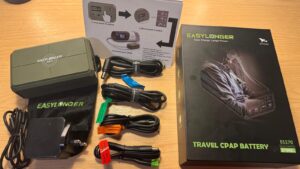
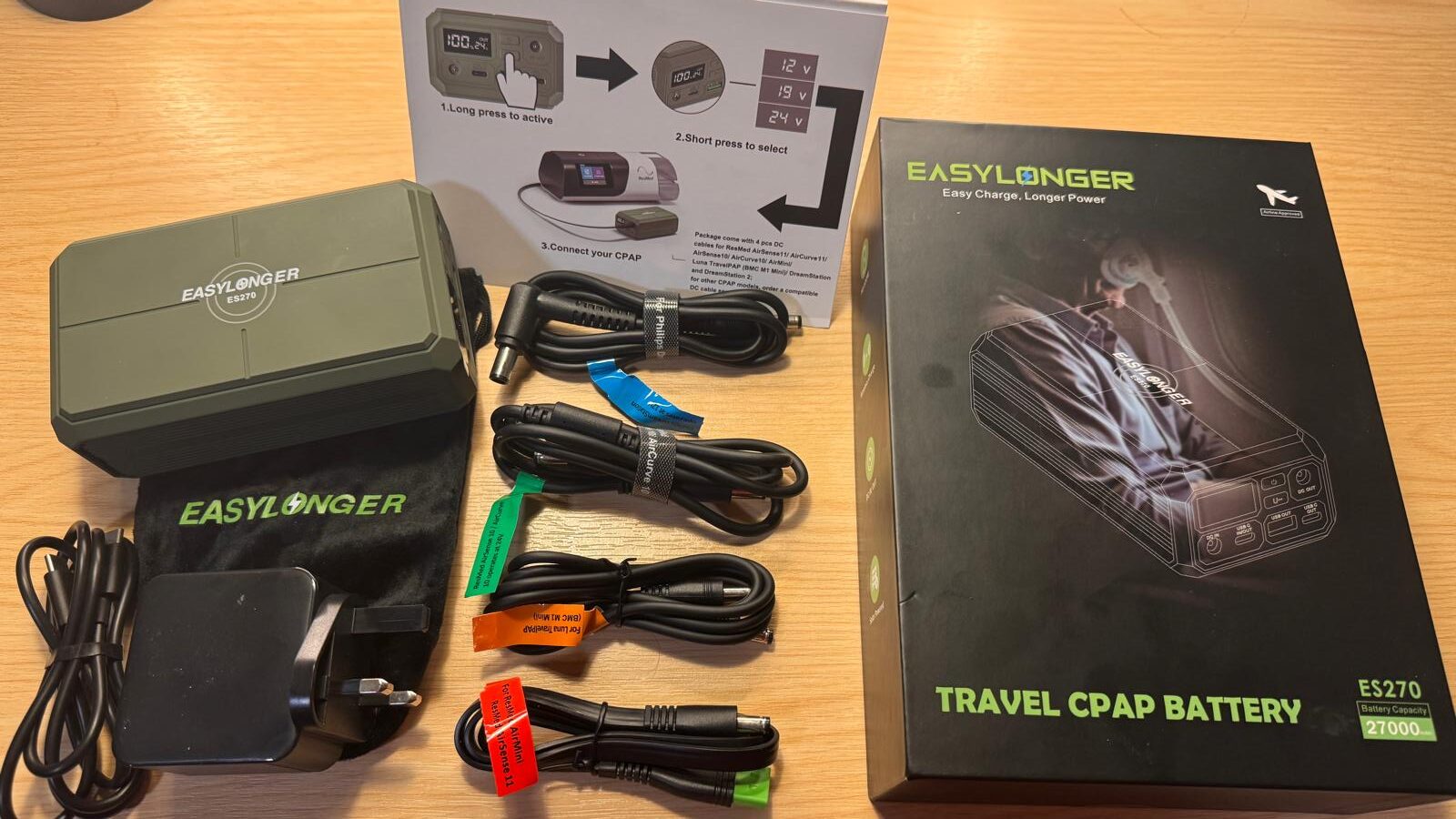
Every CPAP airline policy above points the same way on power. Since almost every airline here tells you to bring your own power, that is the one purchase this article actually argues for. Whatever machine you run, the battery has to clear two hurdles. One is the watt-hour ceiling above. The other is the voltage your own machine expects, which is printed on the label underneath it. I use Easylonger batteries, and the ES270 is the one that flies without approval because it sits at 99.9 Wh.
For everything beyond airlines, such as security, hotels and camping, see my CPAP travel guide.
Last verified: 7 October 2026. Airline policy changes without notice, so I re-check this page periodically and date each revision. If you have written confirmation from a carrier I have marked “not published”, send it to me and I will add it with the date.
For Airlines: How to Be Added or Updated
If you work for an airline and want your CPAP airline policy added or updated, use my contact form. Send it from an official email address, but please don’t include links, because I don’t open them. Instead, tell me the menu path from your homepage to the policy, such as Homepage > Assisted Travel > Medical > CPAP. I only quote what airlines publish on their own websites, so I can’t use a statement sent by email alone.