You can use a CPAP in an RV, motorhome or caravan, and how you power it depends mainly on whether you have hookup.
This article contains affiliate links and we may earn a small commission if you make a purchase through them. At no extra cost to you, this helps with the running costs of this blog.
Running a CPAP on Shore Power / Mains Hookup
On shore power, camp-ground or campsite hookup, running a CPAP in an RV, motorhome or caravan works just like it does at home. You plug the machine’s normal power supply into an outlet inside the vehicle and sleep as usual. That is what my father does in his motorhome whenever mains hookup is available, and he saves his battery for the nights without it such as on rally fields.
However, every hookup has a limit, and the UK’s Caravan and Motorhome Club explains that if you overload your mains system, “a circuit breaker will disconnect your supply.” If that happens overnight, the CPAP stops too, so avoid running heavy appliances such as heaters while you sleep.
Once you are off hookup, the real question is how much power your machine uses through the night. For carry-on rules, airport security and the rest of the trip, see my CPAP travel guide.
How Much Power Does a CPAP Use Overnight?
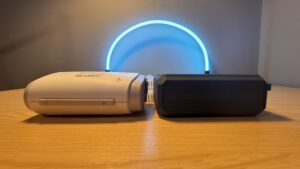
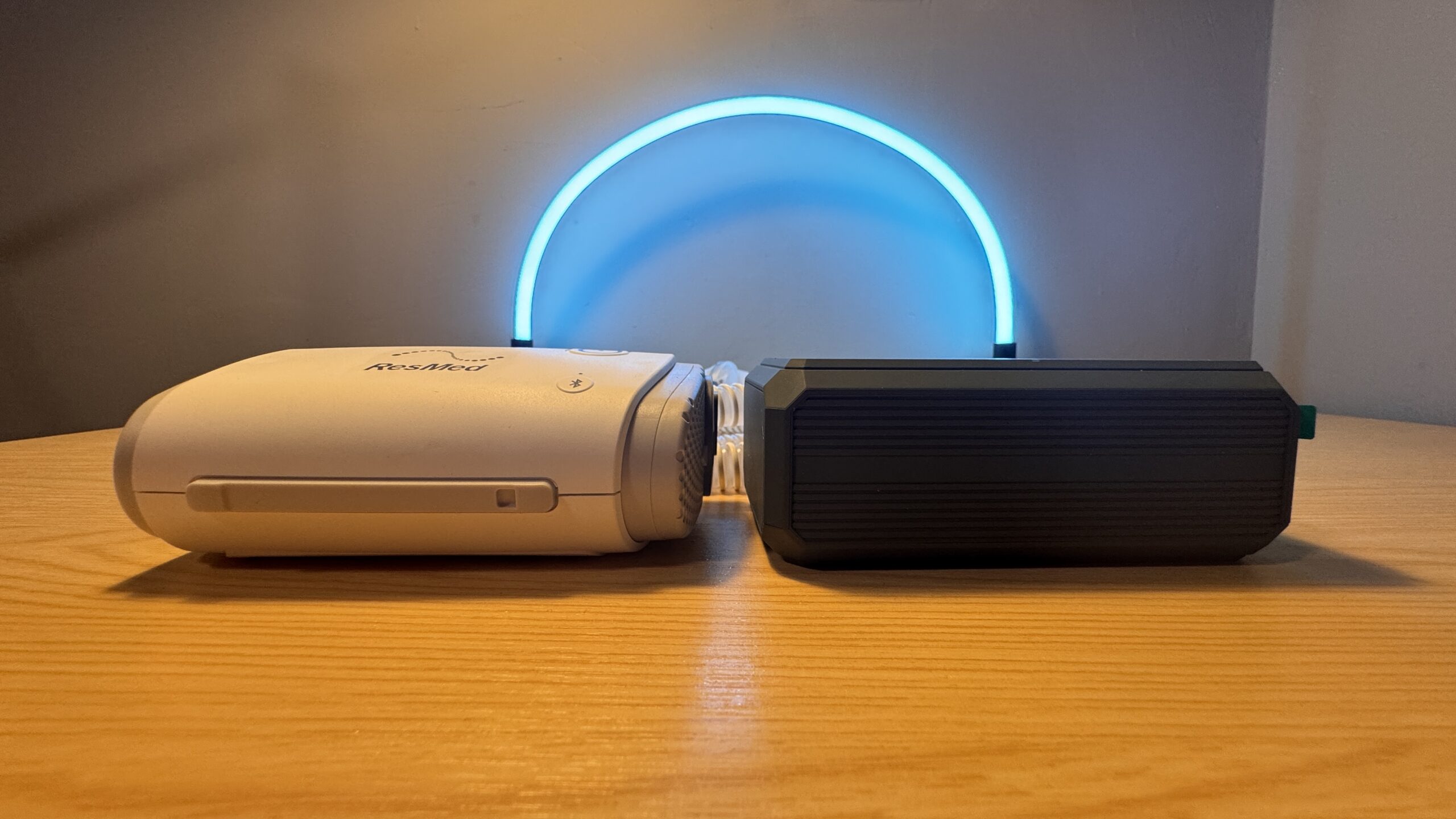
A CPAP uses far less than its label suggests, because the printed wattage is the most the power supply can deliver. I got these figures by running each machine from a battery of known size and counting the nights it lasted.
| Machine | Setup | Battery | Nights | Per night |
|---|---|---|---|---|
| ResMed AirMini | HumidX (waterless) | 148 Wh | 4.5 | About 33 Wh |
| ResMed AirSense 10 AutoSet | Humidification off | 148 Wh | 3.5 | About 42 Wh |
| Philips DreamStation Auto | Humidification off | 276.48 Wh | 4.5 | About 61 Wh |
The nameplate figures tell a very different story, since ResMed rates the AirSense 10 at 53W typical. Over eight hours that would come to about 424 Wh, yet mine used roughly 42 Wh a night.
Your own figure depends on pressure, mask leak and humidifier settings, so treat these numbers as a guide rather than a promise. Therefore, run your machine from a battery at home for a night before you rely on it on the road.
Is My CPAP a 12V or 24V Machine?
It depends on the machine, so check the DC rating on its label before you buy any cable or converter. For example, the ResMed AirSense 10 and AirMini both take 24V, whereas my father’s Philips DreamStation Auto takes 12V.
That difference matters because most RVs, motorhomes and caravans run their 12V outlets from a 12V battery. A 12V machine can run straight from that with the right DC cable, while a 24V machine needs a converter.
Can I Run a CPAP From a Leisure Battery?
Yes. A leisure battery, which an RV owner would call a house battery, is a deep cycle battery built for repeated heavy discharge. ResMed recommends exactly that type in its AirMini DC/DC converter guide, so it suits a CPAP far better than the starter battery.
How many nights you get depends on the battery’s chemistry as much as its amp-hour rating. A 100 Ah lead-acid or AGM leisure battery holds about 1,200 Wh, although only about half of that is usable.
At about 61 Wh a night, that usable 600 Wh would run my father’s CPAP for nearly ten nights on its own. In contrast, a lithium leisure battery with the same rating lets you use most of its capacity.
Even so, the CPAP shares that battery with your fridge, lights, water pump and heater fan, so count those too.
DC Converter or Inverter?
Use DC where you can, because an inverter converts the power twice and wastes some of it as heat along the way. First, the inverter turns 12V DC into household AC, and then the CPAP’s own power supply turns it back into DC.
ResMed sells DC/DC converters for the AirSense 10 and AirMini, and each one accepts either a 12V or 24V supply. For example, the Air10 DC/DC Converter 90W outputs 24V at 3.75A, which matches the AirSense 10 exactly.
Check which converter your machine needs, since each one is made for a specific model. Both ResMed guides also state that the converter is “not intended for use on an aircraft,” so keep it for the road.
An inverter still works if your machine has no DC lead, although you will get fewer nights from the same battery.
Will a CPAP Drain My Starter Battery?
It can, if the outlet you plug into runs from the starter battery rather than the leisure battery. In most motorhomes and camper vans, the outlets in the living area run from the leisure battery.
However, the dashboard outlet often runs from the starter battery, so a night of CPAP could leave the engine unable to start. Check your handbook or the habitation control panel to see which battery feeds which outlet.
Using a CPAP in a Caravan or Travel Trailer
A caravan, which Americans call a travel trailer, has no engine of its own, so the CPAP runs from either hookup or the caravan’s leisure battery. As a result, the tow car’s starter battery plays no part once you have unhitched and set up on site.
On hookup, the caravan’s built-in charger keeps the leisure battery topped up while you plug the CPAP into a regular outlet. Off hookup, the same leisure battery runs the CPAP overnight, along with the lights, water pump and heater fan.
Many tow vehicles can also charge the caravan’s leisure battery while you are towing, through the electrical connection on the tow bar. However, that depends on how the car and caravan are wired, so check before relying on it for a night off hookup.
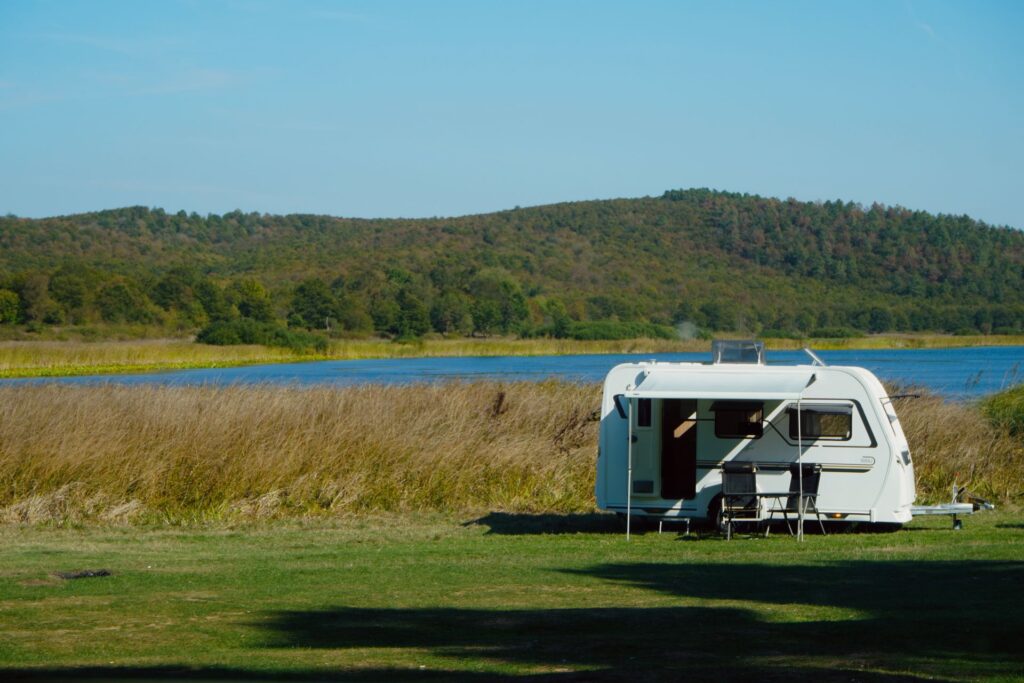
If your caravan has a motor mover (remote control on the axles), remember that it draws heavily from the same leisure battery. Therefore, check the battery’s charge after pitching, especially if you plan a night without hookup.
A separate CPAP battery works in a caravan exactly as it does in a motorhome, and it leaves the leisure battery free for everything else.
Using a Separate CPAP Battery in an RV, Motorhome or Van
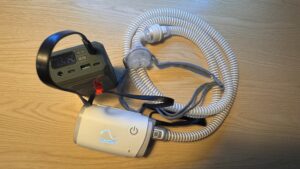
A dedicated CPAP battery keeps your therapy off the vehicle’s electrical system altogether, which removes any risk to the leisure or starter battery. This is how my father runs his Philips DreamStation Auto in his motorhome when there is no hookup, using a CPAP Battery rated at 276.48 Wh.
He connects the DreamStation to the CPAP Battery with a 12V DC cable, so no inverter is involved. With humidification off, this gives him about 4.5 nights, or roughly 61 Wh a night. A higher capacity 297.6 Wh CPAP battery is also available, if you wanted more reassurance.
He then recharges the battery from the motorhome power outlets while driving to the next site. As a result, the battery only has to cover the nights he actually spends without hookup.
Check that the battery’s DC output matches your machine, because a 24V machine needs a genuine 24V output. That is why an ordinary USB power bank will not run either ResMed machine.
If the battery offers several voltages, select your machine’s voltage with the machine connected, just before you switch on.
Using a CPAP in a Camper Van or Van Life Setup
A camper van works the same way as a motorhome, although it usually has less space and a smaller leisure battery. Many van conversions pair a lithium leisure battery with solar panels and a charger that tops it up while you drive.
That setup suits a CPAP well, since the next day’s driving or sunshine can easily replace the 33 to 61 Wh used overnight. However, solar output drops sharply in winter, so plan on driving or hookup to recharge when the days are short.
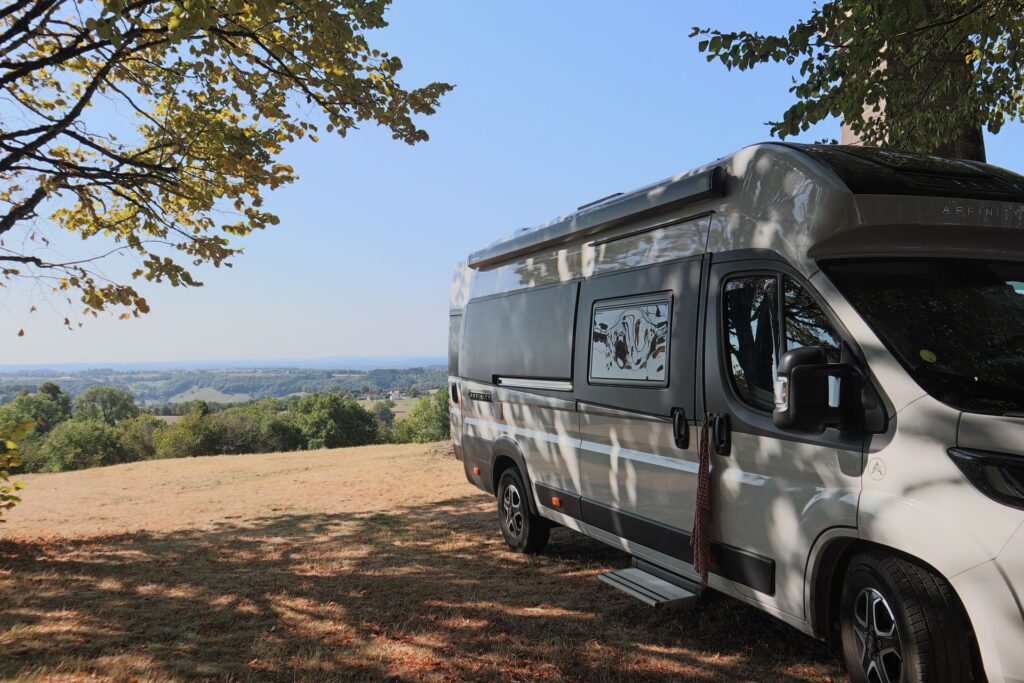
If you are converting a van, factor in the CPAP in your power budget from the start, alongside the fridge and heater.
Should I Use the Humidifier Off Grid?
Only if your battery has enough capacity to spare, because heated humidification uses far more power than the CPAP’s motor does. Both full-size machines in my figures ran with humidification off, which is a big part of why they lasted so long.
The ResMed AirMini avoids the problem, since its HumidX is waterless and draws no power at all. I use the standard HumidX on the ground and switch to the HumidX Plus when I fly, because cabin air is much drier.
With a full-size machine, try a night at home with the humidifier off to see whether you sleep comfortably without it. If you do, you can get by with a smaller battery, and remember, the bigger the battery or power pack that you take with you, the more weight you’ll be adding to your axles.
Flying Out to Hire an RV or Motorhome?
If you are flying out to collect a rental RV or motorhome, the battery you use at home may not be allowed to fly. Under the FAA’s lithium battery rules, which match the international rules most airlines follow, batteries up to 100 Wh can go in your carry-on.
Batteries above 100 Wh and up to 160 Wh need the airline’s approval, and anything larger cannot fly at all.
That rules out batteries such as the earlier mentioned 276.48 Wh and 297.6 Wh, which are banned from BOTH checked bags as well as carry-on.
My post on CPAP battery rules for flying covers the rest, including whether a CPAP battery counts as a power bank. Meanwhile, my road trip battery guide explains what to pack instead when your trip starts with a flight.
If you fly with your CPAP, my free printable CPAP luggage tags mark your carry-on as medical equipment, six colours per sheet to choose from, in nine languages.